Оставьте ваши данные и комментарий
Мы свяжемся с вами для согласования удобной даты и времени
EN
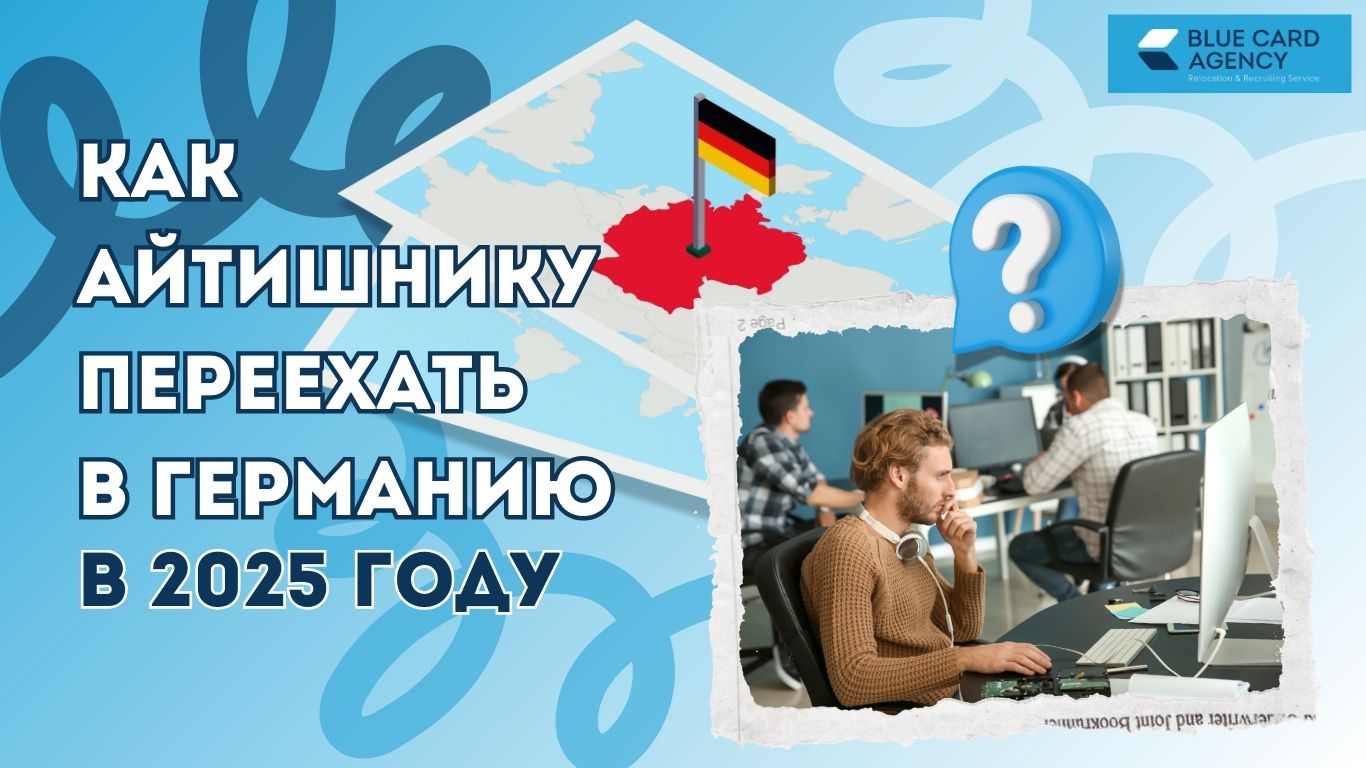
How IT Specialists Can Move to Germany in 2025:
Secrets of a Successful Relocation
Germany’s IT sector continues to grow rapidly, and the government keeps simplifying relocation procedures for skilled professionals.
In this guide, we break down the step-by-step relocation process and key нюances that will help make your move as smooth and comfortable as possible.
Life in Germany: What to Expect
Germany consistently ranks among the countries with the highest quality of life. In 2025, it holds 14th place in global rankings, remaining one of the most attractive destinations for IT specialists.
Here’s what you can expect:
✅ Work-life balance
IT professionals in Germany enjoy competitive salaries, 30 days of paid vacation, paid sick leave without loss of income, and in many companies, shorter working hours on Fridays. Here, you truly work to live — not the other way around.
Career Opportunities
Germany is home to major technology companies such as SAP, Siemens, IBM Germany, Google Germany, Bosch, and Deutsche Telekom. At the same time, startups in AI, cybersecurity, and fintech are growing rapidly.
Working in this environment not only provides valuable experience but also strong networking opportunities.
Germany’s insurance system covers medical expenses, protects employees from unfair dismissal, and provides access to various government support programs. This offers long-term stability and peace of mind.
Competitive Salaries
IT professionals earn well above the national average. Developers with 3+ years of experience can expect salaries starting from €60,000 per year, while senior specialists often earn from €80,000 annually.
German tax legislation also provides various deductions, benefits, and social payments.
International IT Community
Germany attracts specialists from around the world. In many large tech companies, English is the primary working language. Numerous meetups, conferences, and hackathons make it easy to integrate into the professional community.
Permanent Residency & Citizenship
After 21 months of working under an EU Blue Card, you may apply for permanent residence. German citizenship is typically possible after 3–5 years, granting full access to the benefits of living in the EU.
How to Move to Germany
The employment process requires careful preparation. You need to:
- Find an employer
- Receive a job offer
- Apply for a visa
- Obtain a residence and work permit
To avoid mistakes and simplify the process, consider professional relocation support.
Germany offers IT specialists a real opportunity to build a stable future in a country with a strong economy and high living standards.
Most In-Demand IT Fields in Germany
Demand for IT professionals continues to grow. In 2025, over 137,000 technical vacancies are open, particularly in:
- Software Development (Python, Java, C++)
- Cybersecurity
- Data Science & Machine Learning
- Cloud Engineering
- DevOps & Automation
IT professions are officially listed among shortage occupations, which simplifies visa and work permit procedures.
Main Steps to Relocate as an IT Specialist
If you’re planning your move, you should consider several key aspects: visa application, job search, housing, and integration.
1️⃣ Preparing Your Documents
Before moving, you need to prepare the following documents:
- Completed and signed visa application (2 copies)
- Two recent biometric photos (45×35 mm)
- Valid passport
- National ID
- University diploma or proof of qualification
- Recognition of diploma (if required)
- For IT specialists without a university degree: at least 3 years of relevant work experience (since November 2023 rule updates)
- CV and motivation letter
- Employment contract or job offer (minimum 6 months)
- Health insurance
2️⃣ Applying for the EU Blue Card
The EU Blue Card is the most common residence permit for IT professionals.
Benefits include:
- Simplified application procedure
- Faster processing
- Accelerated permanent residency pathway
Blue Card Requirements in 2025:
- Higher education degree OR at least 3 years of IT work experience within the last 7 years
- Employment contract for at least 6 months
- Minimum annual gross salary: €48,300 (or €43,760 for shortage occupations, including IT)
- Knowledge of German is not mandatory, but working language proficiency (typically English B1 or higher) is required
Permanent residence:
- After 21 months with German level B1
- After 33 months without language certification
Germany continues to experience a shortage of qualified IT professionals, and work permit approvals are expected to increase by 10% compared to 2024.
3️⃣ Job Search
It is highly recommended to secure a job before relocation.
Popular platforms:
- StepStone
- Indeed
- Glassdoor
Prepare thoroughly for interviews by researching companies and understanding market expectations. German employers value preparation and initiative.
After signing the contract, you must apply for a national work visa (D-Visa).
4️⃣ Relocation & Integration
After receiving your Blue Card:
- Register your address at the local Bürgeramt
- Open a German bank account
- Enroll in health insurance
- Begin learning basic German (even if your job is in English)
This significantly eases your adaptation.
Important Considerations Before Moving
- Research the city’s culture, climate, and infrastructure.
- Study typical interview questions and company requirements.
- Even basic German will simplify daily life.
- Have sufficient savings for the first few months (rent deposit may equal 2–3 months’ rent).
- Prepare translated and properly formatted documents.
Frequently Asked Questions
Is German required for IT jobs in Germany?
No. Many IT companies operate in English, but German will make integration easier.
How long does the Blue Card process take?
Typically 4–12 weeks, depending on the workload of consulates and immigration authorities.
What expenses should I expect?
Main costs include:
- Visa fees
- Flight tickets
- Rental deposit (2–3 months’ rent)
- Health insurance
- Living expenses before first salary
Can I relocate with my family?
Yes. Your spouse can work without restrictions, and children have access to free public education.
What if I cannot find a job before moving?
There is a job-seeker visa allowing you to stay in Germany for up to 6 months to search for employment.
When can I apply for permanent residence?
With an EU Blue Card:
- After 21 months (German level B1)
- After 33 months (without language proof)
Social Security