Оставьте ваши данные и комментарий
Мы свяжемся с вами для согласования удобной даты и времени
EN
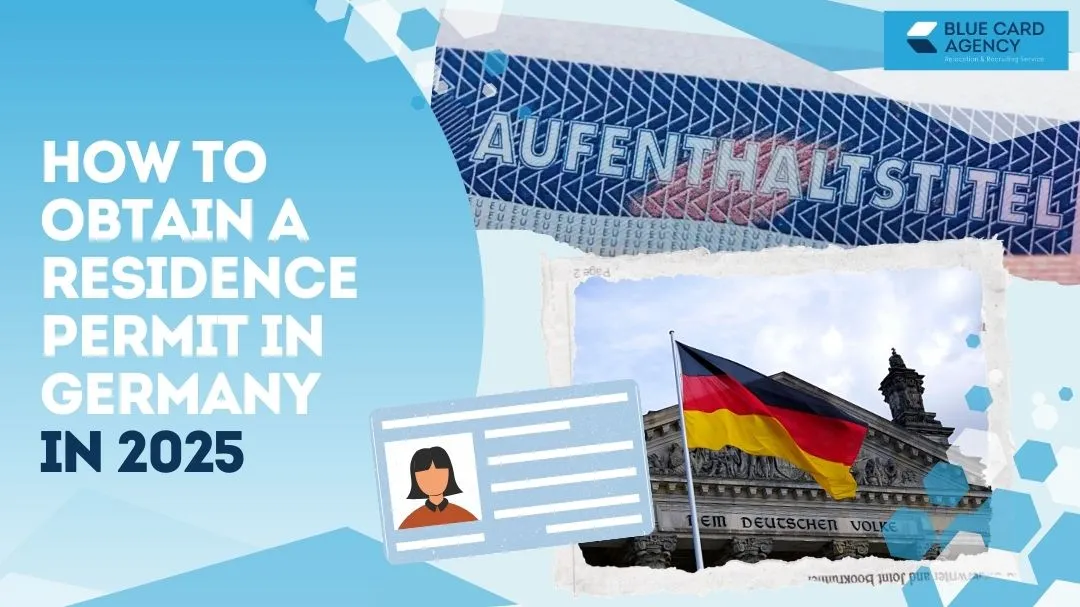
How to Obtain a Residence Permit in Germany in 2025
Germany continues to be one of the most attractive destinations for migration and remains among the TOP 10 best countries for relocation in 2025.
A German residence permit (Aufenthaltstitel) is the key to living, working, and studying legally in the country. Let’s review the most important aspects of obtaining a residence permit in 2025.
What Is a Residence Permit in Germany?
After entering Germany with a national D visa and planning to stay longer than 90 days, applying for a residence permit is mandatory.
The visa allows entry into the country, but to legally reside, work, or study, you must obtain a residence permit.
In Germany, there are two main categories:
1️⃣ Temporary Residence Permit (Aufenthaltserlaubnis)
Issued for a limited period (typically 1 to 3 years) with the possibility of extension. Suitable for employment, studies, or long-term stays.
2️⃣ Permanent Residence Permit (Niederlassungserlaubnis)
Unlimited in duration. Grants full rights to live and work in Germany without time restrictions.
Different types of residence permits are issued depending on the purpose of stay.
Types of Residence Permits in Germany
Below are the most common residence permits available to foreign nationals:
- Employment Residence Permit (Beschäftigung) – for individuals employed in Germany.
- EU Blue Card – for highly qualified professionals with a university degree or significant professional experience.
Requirements include a job contract with a German employer and a salary above the official threshold:- €48,300 per year (general minimum)
- €43,760 for shortage occupations (e.g., IT specialists, doctors, engineers)
- Self-Employment Permit (Selbständigkeit) – for entrepreneurs and freelancers.
- Opportunity Card (Chancenkarte) – introduced in 2024 for qualified professionals. Allows job seeking and employment up to 20 hours per week. May be extended after the first year.
- Family Reunification Permit (Familiennachzug) – for spouses and children of residents.
- Student Residence Permit (Studium) – valid during university studies; allows limited part-time work.
- Job-Seeker Permit (Arbeitssuche) – typically issued after graduation or completion of employment under a Blue Card.
- Research Permit (Forschung) – for scientists, researchers, and academic staff working in Germany.
- Humanitarian Residence Permit (Asylum, §24 Residence Act) – granted on humanitarian grounds.
This is not an exhaustive list. Depending on your situation, other options may be available. Each type has specific requirements.
Who Can Apply for a Residence Permit?
Eligible applicants include:
- Employees
- Freelancers
- Students
- Entrepreneurs
- Researchers and scientists
- Family members of residents
- Job seekers
- Refugees and beneficiaries of humanitarian protection
Certain categories, such as researchers or highly qualified professionals, may qualify for permanent residence under specific conditions.
Employment and the EU Blue Card
If you have received a job offer from a German employer, you may apply for an employment-based residence permit.
Freelancers must demonstrate financial sustainability (for example, bank statements proving sufficient income — typically at least €9,000 per year).
EU Blue Card Requirements in 2025
To qualify, you must:
- Hold a recognized university degree OR demonstrate significant professional experience
- Have a job offer meeting the salary threshold:
- €48,300 (general minimum)
- €43,760 (shortage occupations)
- Have your qualification recognized in Germany
Blue Card Advantages
- Valid for up to 4 years
- Eligible for permanent residence:
- After 21 months with German level B1
- After 33 months without language proof
Business and Startups
Starting a business in Germany also provides eligibility for a residence permit.
Applicants must demonstrate:
- Economic viability of the business
- Benefit to the German economy
- Sustainable financing
Local regulations and legal compliance are critical in this process.
Studying in Germany
German immigration authorities issue residence permits valid for the duration of studies.
After graduation, graduates are granted time to search for employment and switch to a work-based residence permit.
Family Reunification
Spouses and children of German citizens or residence permit holders may apply under family reunification rules.
After:
- 2 years of marriage
- 3 years of residence in Germany
a spouse may qualify for permanent residence.
Humanitarian Grounds
Individuals seeking protection for humanitarian reasons may receive a residence permit based on asylum law.
Required Documents for a Residence Permit
The standard application package includes:
- Valid passport
- Completed residence permit application form
- Biometric photo
- Rental contract (proof of residence)
- Health insurance coverage
- Financial proof (salary slips or bank statements)
- Legal basis for stay (employment contract, university admission, etc.)
Additional documents depend on the type of permit.
Where to Live in Germany with a Residence Permit
Berlin remains one of the most popular cities among migrants. A large international community, developed infrastructure, career opportunities, and relatively affordable rental options make it attractive.
Each district offers a different atmosphere — from historic neighborhoods to modern cultural hubs.
Other cities offer diverse lifestyles:
- Freiburg, Tübingen, Regensburg – quiet and structured living
- Hamburg, Munich, Cologne – vibrant cultural scenes
- Nuremberg, Dresden, Heidelberg – historic character
- Frankfurt, Stuttgart – strong career opportunities
Germany’s diversity allows individuals to choose cities based on lifestyle preferences and professional goals.
Rights Provided by a Residence Permit
- Right to work (depending on permit type; restrictions may apply)
- Access to Germany’s social security system
- Health insurance coverage
- Freedom of movement within the Schengen Area
- Pathway to permanent residence and, eventually, citizenship
Frequently Asked Questions
How long does the residence permit process take?
Typically 4–6 weeks after submission, depending on the local Foreigners’ Office (Ausländerbehörde) and case complexity.
Can I stay in Germany while waiting for approval?
Yes. Upon application submission, you may receive a temporary certificate (Fiktionsbescheinigung) allowing you to remain legally during processing.
Do I need a registered address (Anmeldung)?
Yes. Registration is mandatory before applying for a residence permit.
What level of German is required?
For most residence permits, at least A1 level is required, depending on the purpose of stay.