Оставьте ваши данные и комментарий
Мы свяжемся с вами для согласования удобной даты и времени
EN
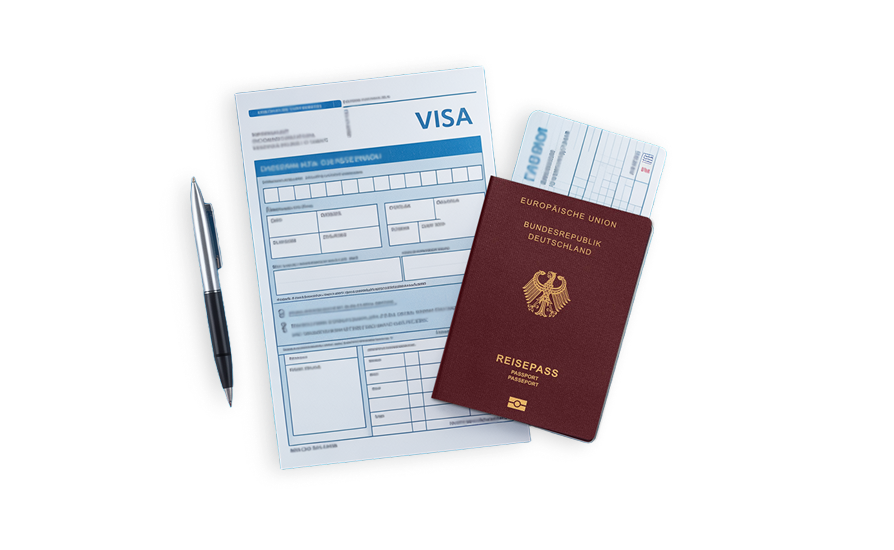
Visa and Residence
Permit Processing in Germany
Service fees from €1299
A full range of services for the preparation and submission of documents, with expert support from Blue Card Agency at every stage.



SERVICE PACKAGES
Ready-made, clear solutions to achieve the best possible result. Package pricing is always lower than ordering each service separately.





Take the test and find out
which visa suits you best
Don’t waste time searching — the test will determine the most suitable visa option based on your circumstances.
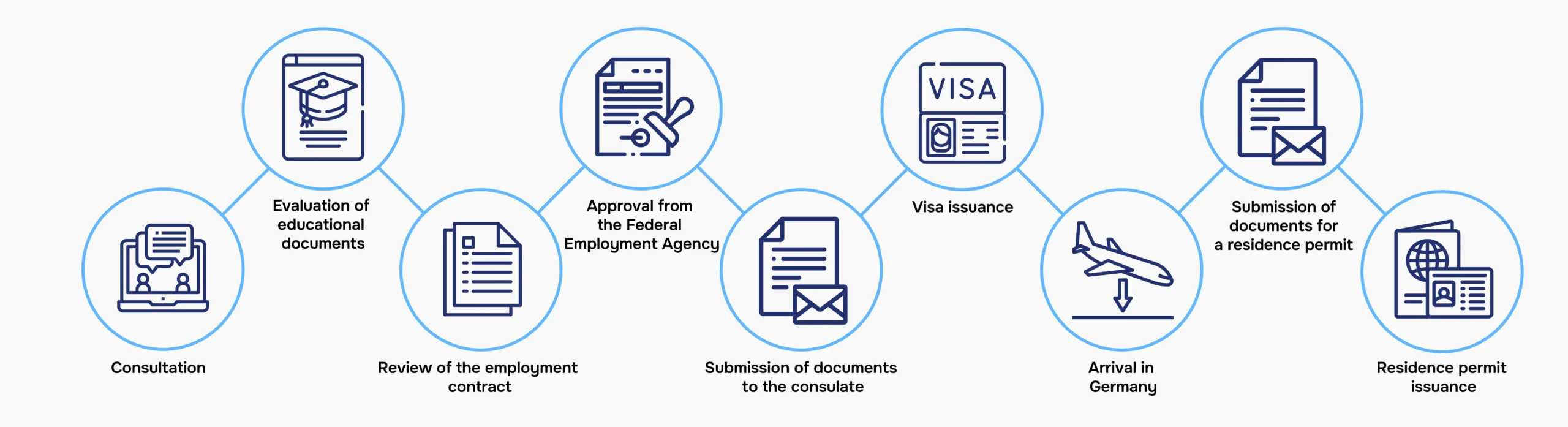
WORK PROCESS
Our experts will help you go through every stage without mistakes or delays.

Relocation of Victoria’s entire family to Germany
Turning to Blue Card Agency became the first step on her journey toward employment in Europe, financial independence, and long-term stability.

The relocation story of Dmitry, a tattoo artist
Why he chose Germany, how developed the tattoo industry is here, what relocation options he considered, and the fears and questions he faced before moving.
Relocation story of a pharmacist to Germany
Is it realistic to find a job as a licensed pharmacist in a German pharmacy?
ADVANTAGES
Trust your relocation to professionals with German precision.



F.A.Q.
Still Have Questions?
We Already Have the Answers
We’ve collected the most common questions about visas, residence permits, and our services —
so you can get the information you need right away, without endless emails or waiting.

They are key but separate stages of the immigration process.
- A visa is permission to enter Germany and stay for a short period (usually up to 3–6 months). It is applied for at the German embassy or consulate in your country of residence. The purpose of a visa may include study, employment, family reunification, etc.
- A residence permit is authorization for long-term stay (one year or longer), which you obtain after arriving in Germany from the local immigration office (Ausländerbehörde). A valid reason is required, such as employment, family reunification, study, or business activity.
In short: a visa allows you to enter Germany, while a residence permit allows you to live there legally long term. In many cases, you first enter Germany with a national visa (for example, for work or family reunification) and then apply for a residence permit.
A refusal is неприятная, but not a fatal situation. The key is to act strategically.
- Carefully review the refusal letter to understand the reason and use it as the basis for your next steps.
- File an appeal (remonstration). You usually have about one month to challenge the decision.
- Address the reason for the refusal. This may involve insufficient financial proof or an incomplete set of documents. We help analyze the refusal, prepare the necessary supporting documents, and draft a strong appeal letter.
Our recommendation: Do not act blindly. A well-prepared response to a refusal significantly increases your chances of success when reapplying.
Yes, in many cases it is possible. Language requirements depend entirely on the purpose of your relocation. For work visas, English is often sufficient, and for the EU Blue Card, language requirements are generally more flexible. For family reunification, only a basic level of German is usually required. In cases of study or job seeking, English may also be acceptable. We will help you determine which program is best suited to your situation and clearly explain the exact language requirements that apply to your specific case.
- A visa itself cannot be extended in Germany. It must be converted into a residence permit at the local immigration office (Ausländerbehörde) before the visa expires.
- A residence permit can be extended in Germany. The extension is processed by the same immigration office (Ausländerbehörde). It is important to apply in advance (we recommend 2–3 months before expiration).
To extend a residence permit, you must confirm that you continue to meet the required conditions (employment, sufficient financial means, valid purpose of stay). Important: We support our clients throughout the residence permit extension process — helping prepare the required documents and ensuring a smooth application.
Yes, absolutely. We understand that circumstances can change. You can discuss the details with your personal manager and adjust your service package according to your current situation.
Getting started is simple. You can:
- Submit a request through the contact form on our website and indicate your preferred method of communication.
- Send us an email briefly describing your situation.
- Call us during business hours.
Our manager will contact you within 24 hours, clarify the details, and schedule your initial consultation (online or in person). After the consultation, we will prepare a personalized proposal and action plan for you.
We provide real professional guarantees — not unrealistic promises such as “100% visa approval,” since the final decision always rests with government authorities. We guarantee:
- Professionalism and expertise. Full compliance of our work with German legislation and current requirements of consulates and authorities.
- Transparency. A clear contract, step-by-step plan, and fixed package pricing.
- Comprehensive support. We handle communication with official authorities, prepare and review documents, complete application forms, and draft motivation letters.
- Confidentiality. Protection and security of your personal data.
- Support at every stage. You will stay in contact with your personal manager and can track the entire process through our mobile application.
Our main goal is to achieve results, minimize the risk of refusal due to formal errors, and save you time and stress.
BLOG
In our blog, we provide up-to-date insights on relocation, living, and working in Germany,
along with practical guidance to help you adapt successfully.

Jan 9, 2025
Salary trends in Germany:
What to expect in 2025?
In recent years, the German labor market has been changing rapidly — and 2025 will be
no exception.
Jan 9, 2025
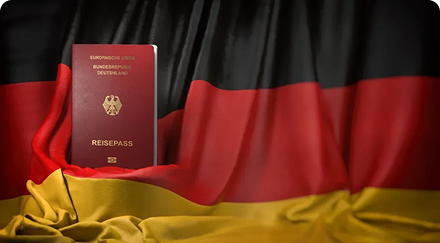
Obtaining German citizenship in 2025:
A step-by-step guide
The process may seem complex, but with the right information and preparation, it becomes far more manageable.
Jan 9, 2025
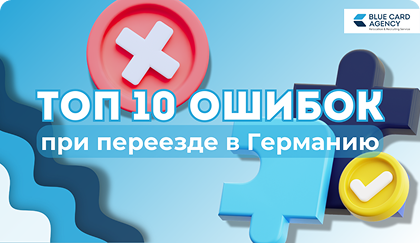
Top 10 mistakes when moving to Germany
We’ve compiled the 10 most common mistakes people make when relocating to Germany — and how to avoid them.
OUR PARTNERS











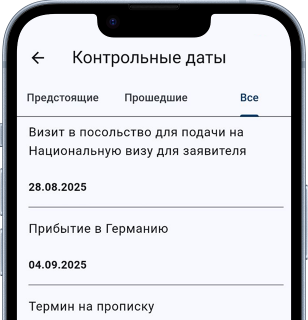
Download Our App!
Everything you need for relocating to Germany in one place: visa and document tracking, 24/7 chat with your personal manager, up-to-date adaptation tips, deadline reminders, and a personalized relocation plan — manage the entire process without calls or bureaucracy.


Visa to Germany
Visa to Germany
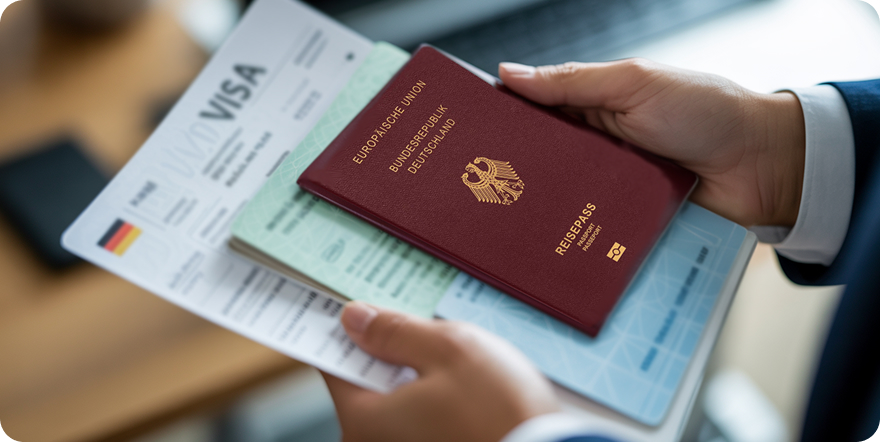
The first and most important step toward relocation, employment, or study in Germany is a visa to Germany. The German immigration system is known for its strict formal requirements and demands meticulous compliance with all regulations. A visa refusal is quite common, as Germany conducts very thorough checks to ensure applicants meet all criteria. Blue Card Agency offers expert support, ensuring that the question of how to obtain a visa to Germany does not cause fear, doubts, or stress.
Our services cover the full range of visa categories. The primary focus is on long-term permits (type D), which open the path to obtaining a residence permit. We provide a comprehensive service that begins with a consultation on choosing the appropriate type of permit.
For the visa application process in Germany to proceed smoothly, it is essential to clearly understand the differences between the two main types of permits. These are the Schengen visa to Germany (type C) for short-term stays and the National visa to Germany (type D) for long-term residence.
The Schengen category is intended for short visits of up to 90 days (tourism, business trips). However, for any purpose involving long-term stay, employment, or education, a National visa to Germany is required.
Our expertise is primarily focused on type D visas, as they allow legal residence in the country with the possibility of subsequently obtaining a residence permit. Proper issuance of this permit is the foundation of your future life in Germany, which is why mistakes here are unacceptable.
National Visa to Germany (D) for Long-Term Stay
The National visa to Germany (type D) is an entry and residence permit issued for a period from three months up to one year. Unlike the Schengen visa, a visa D in Germany allows you to begin the registration and employment process immediately upon arrival.
In practice, this permit serves as a temporary substitute for a residence permit, which is issued within Germany.
Our specialists clearly determine the most suitable visa type based on your qualifications and goals. This may include a permit for highly qualified specialists (Blue Card), a job-seeker visa, or a family reunification visa.
Each of these categories has its own specific requirements, which is why documents for a visa to Germany require an individual approach. We assist at every stage so you can obtain the permit with minimal delays.
Main Types of Long-Term Visas: Work Visa to Germany and Blue Card
Among the most in-demand categories is the work visa to Germany. It is intended for non-EU nationals who have an employment contract with a German employer.
The requirements include compliance with qualification standards and salary thresholds. The most attractive option is the EU Blue Card, which provides an accelerated pathway for individuals with higher education and high income.
The work visa to Germany and Blue Card are our core specialization. The process includes verification of the employment contract, assistance with diploma recognition (if required), and professional application for a visa to Germany with emphasis on your high qualifications.
We ensure that the document package is prepared to highlight your value to the German labor market.
Specifics of Obtaining: Family Reunification Visa and Student Visa to Germany
The family reunification visa allows spouses, children, and in certain cases parents to relocate to a German citizen or a residence permit holder.
This process requires special attention to documents confirming family ties, knowledge of the German language (for spouses), and sufficient living space.
If your goal is education, you will need a student visa to Germany. This category is intended for applicants, students, and those planning intensive language courses.
A student visa requires proof of admission to an educational institution and financial means (for example, a blocked account). We advise on all requirements and assist in collecting the necessary documents.
Documents for a Visa to Germany and Visa Application Procedure
A key stage is the documents for a visa to Germany and their correct collection and preparation.
Regardless of the category — whether a tourist visa to Germany or a National visa to Germany — the package includes a passport, completed application form, photographs, health insurance, and documents confirming the purpose of travel.
We ensure thorough review and preparation of the entire package before the visa application in Germany is submitted. We also assist with proper completion of the application form, which is often the source of errors.
Financial and Time Aspects: Cost of a Visa to Germany and Processing Time
Questions such as the cost of a visa to Germany and visa processing time in Germany are always among the most relevant.
The consular fee is usually fixed, but the total cost of a visa to Germany may include expenses for translations, notarization, and agency services. We provide a transparent breakdown of all expected costs.
The visa processing time in Germany can vary significantly. A tourist visa to Germany is usually issued faster (several weeks), while a National visa to Germany (D) requires longer processing (from 1 to 3 months).
With our professional assistance, processing times can be significantly reduced by avoiding delays.
Overcoming Difficulties: Visa Refusal in Germany and Guarantee of Success
If you receive a visa refusal in Germany, we conduct a detailed analysis of the reasons, prepare a professional appeal letter, and assist with reapplication.
We guarantee that our comprehensive support will allow you to obtain a visa to Germany on the first attempt. We take full responsibility for document preparation so that the visa application process in Germany is successful.
Contact us today to learn the exact cost of obtaining a visa to Germany and the expected processing time for your specific case.
Call us at +49 30 896 778 776.
Residence Permit Germany — Complete Guide for 2025–2026
A residence permit in Germany remains one of the most востребованных immigration options in Europe. Germany continues to issue thousands of residence permits each year due to its stable economy, strong labor market, and transparent immigration legislation.
Today, a residence permit Germany can be obtained on various legal grounds, including employment, EU Blue Card, business registration, freelance activity, studies, or family reunification. At Blue Card Agency, we provide full legal support and know exactly how to obtain a residence permit in Germany quickly and safely.
Types of Residence Permit in Germany in 2025
German immigration law divides residence permits into temporary residence permit (Aufenthaltserlaubnis) and permanent residence permit (Niederlassungserlaubnis).
In most cases, applicants first receive a temporary residence permit in Germany, which can later be extended or converted into permanent residence after meeting integration and employment requirements.
The most popular types of residence permit Germany 2025 include work-based residence permits, EU Blue Card, residence permit for entrepreneurs, freelance residence permit Germany, and student residence permits.
Work Residence Permit Germany — The Fastest Path
A work residence permit in Germany is the most reliable and fastest way to relocate legally. If you have a university degree and a job offer that meets salary thresholds, you may apply for the EU Blue Card Germany.
The EU Blue Card allows you to apply for permanent residence after 21–33 months. For applicants without higher education, alternative options under §18 AufenthG allow obtaining a work-based residence permit Germany after entering on a national D visa.
For highly qualified professionals, the work residence permit Germany remains the most stable long-term solution.
Residence Permit for Entrepreneurs in Germany
An entrepreneur residence permit Germany is available to individuals who present a viable business plan benefiting the German economy.
Unlike other EU countries, Germany does not require extremely high investment amounts. After approval from the Chamber of Commerce, applicants receive a national visa followed by a residence permit for entrepreneurs in Germany, typically issued for three years with extension rights.
Freelance Residence Permit Germany (Freiberufler)
The freelance residence permit Germany is especially popular among IT specialists, designers, consultants, and translators.
To obtain a freelance residence permit in Germany, applicants must provide letters of intent from German clients and demonstrate sustainable income projections. Once approved, the permit is usually issued for up to three years with the possibility of extension.
This category offers flexibility and independence while maintaining full legal status in Germany.
Temporary Residence Germany — A Flexible Entry Strategy
Temporary residence in Germany is often the first step before applying for a full residence permit Germany.
Many applicants enter Germany with a national D visa (Chancenkarte, qualification recognition visa, language courses, au pair, volunteer programs) and later convert their status to a temporary residence permit Germany.
Applying for residence permit Germany while already living in the country simplifies housing registration, bank account opening, and document submission.
Student Residence Permit Germany
A student residence permit Germany is issued after enrollment in a university or intensive language program (minimum 18 hours per week).
Graduates receive an additional 18 months to search for qualified employment, after which the student residence permit Germany can be converted into a work residence permit.
This path remains one of the most accessible and predictable ways to build a long-term future in Germany.
Documents for Residence Permit Germany
Regardless of the category, documents for a residence permit Germany generally include a valid passport, biometric photos, completed application form, proof of financial means, German health insurance, rental contract, and confirmation of legal grounds such as employment contract, university admission, or business plan.
Correct preparation of documents significantly increases approval chances and reduces residence permit processing time Germany.
Residence Permit Extension Germany — Maintaining Legal Status
Residence permit extension Germany requires maintaining the original grounds of stay. Applicants must show continued employment, business activity, or study enrollment, along with integration progress and absence of tax or insurance debts.
Applications for residence permit extension Germany are typically submitted 6–8 weeks before expiration.
Permanent Residence After Temporary Residence Permit Germany
After several years of legal stay, holders of a temporary residence permit Germany may apply for permanent residence (Niederlassungserlaubnis).
Depending on the category, permanent residence can be obtained after 21 months (EU Blue Card with B1 German), 33 months (Blue Card without B1), or 5 years under standard residence permit Germany conditions.
Why Germany Remains the Top Choice for Long-Term Residence
A residence permit Germany provides access to one of Europe’s strongest job markets, healthcare systems, and education sectors.
With salaries often starting from €50,000 per year for qualified professionals, free movement within the Schengen area, and the possibility of German citizenship after 5–8 years, Germany remains one of the most attractive destinations in Europe.
How to Obtain Residence Permit Germany in 2025
If you are planning relocation, now is the right time to apply for a residence permit in Germany.
Blue Card Agency provides full legal support — from choosing the correct residence permit Germany category to document preparation, embassy procedures, and post-arrival registration.
Contact us today to receive a personalized strategy for obtaining your residence permit Germany in 2025.