Leave your details and a comment
We'll contact you to arrange a convenient date and time.

EN
Types of visas for moving to Germany
Moving to Germany opens up many opportunities, but the first and most important step is choosing the right visa. Visas for moving to Germany come in different formats and categories, each matched to a specific purpose of stay. The visa type you choose determines whether you can legally work, study, run a business, and live in the country long term, as well as your next steps toward obtaining a residence permit.
Germany attracts people with its stable economy, high standard of living, strong education system, and social protection. That is why it is important to understand in advance which visas are available for moving to Germany, and choose the option that truly matches your goals, professional background, and life plans.
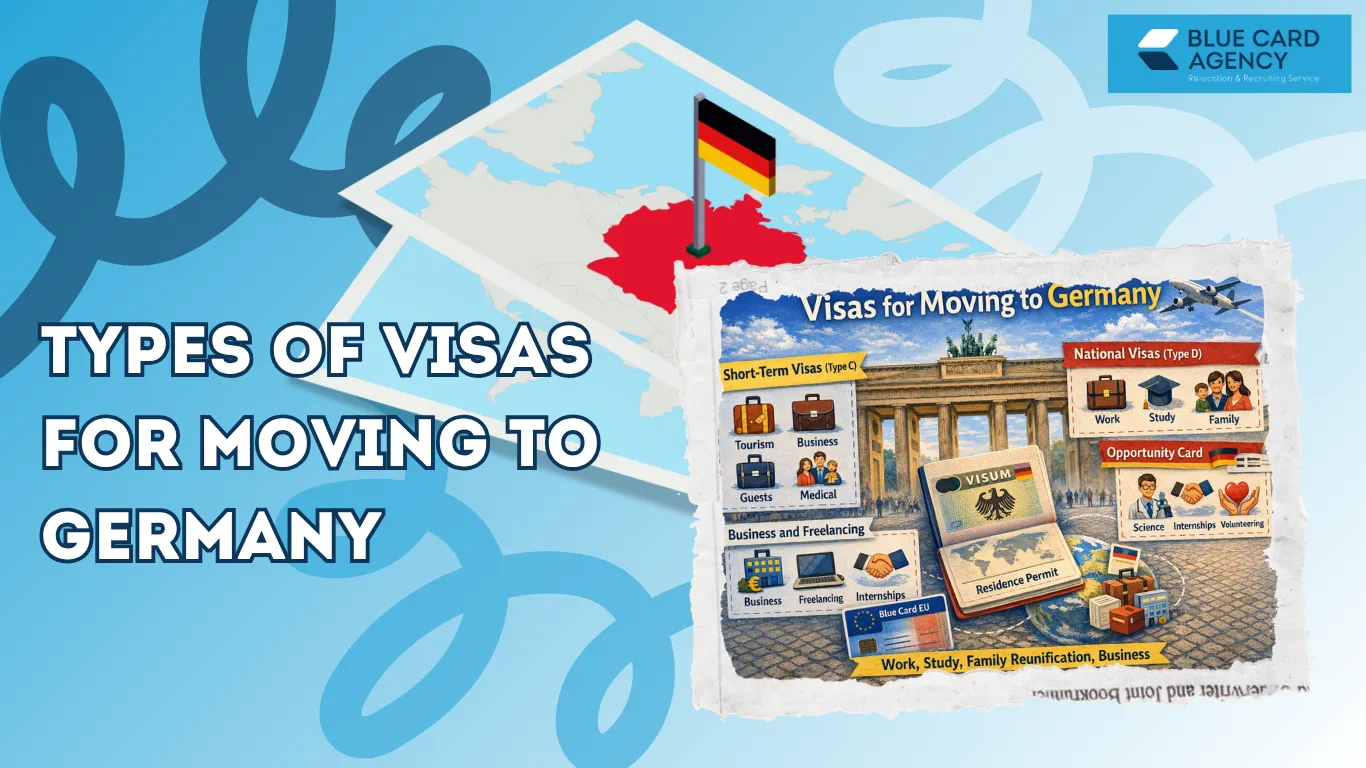
Main visa categories
All types of visas for moving to Germany are generally divided into short-term and long-term visas. There are type C visas (Schengen, up to 90 days of stay) and
national type D visas, which form the basis for long-term residence and further immigration.
Short-term visas (type C)
Schengen visas are suitable for temporary stays in Germany of up to 90 days within a 180-day period. They are used for purposes that are not related to long-term residence or employment.
The main subtypes include a tourist visa for leisure and travel, a business visa for negotiations and trade fairs, a visitor visa for seeing relatives and friends, a medical visa for treatment in German clinics, and a transit visa for connections through German airports.
It is important to remember that these visas do not grant the right to official employment or long-term study.
National visas (type D)
For a long-term move, you apply for a national visa. These are the visa types for moving to Germany allow you to legally live in the country, work, study, or reunite with family, and also serve as the basis for obtaining a residence permit.
Work visas
Work visas are among the most in-demand. They include the visa for qualified professionals (Fachkräftevisum) for applicants with recognized education and an employment contract, the Blue Card EU for highly qualified specialists with the required income level, and the job search visa, which allows you to stay in the country for up to 6 months without a contract.
The Chancenkarte / Opportunity Card deserves special attention. It is a new immigration program in effect since 2024. It allows specialists to look for work in Germany for up to 12 months without a job offer, work part-time legally, and complete internships, making this format especially attractive for professionals.
Student visas
Germany is considered one of the best countries for higher education. Foreign students can apply for student visas, including a visa for studying at a university or college, as well as a visa for preparatory studies (Studienkolleg) if recognition of a foreign diploma is required. These visas allow you to legally live in the country and work a limited number of hours while studying.
Family visas
For those planning to move with close family members, family reunification visas are available. This includes a spouse visa for marriage to a German citizen or resident (usually requiring A1-level language knowledge), a visa for children, and in some cases a visa for parents if care is needed.
Business, freelancing, and other grounds
Germany actively supports entrepreneurs and self-employed professionals. This category includes the visa for freelancers and self-employed people (Freiberufler / Selbstständige Tätigkeit), which requires proof of professional experience, a business plan, and financial viability, as well as a visa for entrepreneurs and investors with an economically justified project. There are also visas for researchers, interns, qualification recognition, as well as volunteer and humanitarian visas.
Summary and next step
Choosing the right visa is a key stage on the path to immigration. Understanding which visas are available for moving to Germany helps you avoid mistakes, save time, and choose the best strategy. Different visa types for moving to Germany have their own requirements and nuances, so it is important to consider not only your current situation, but also long-term goals: career, family, business, and obtaining permanent status.
If you are not sure which visas for moving to Germany are right for you, professional support can make the process much easier.
Blue Card Agency supports clients at every stage — from analyzing your situation and selecting the best option to preparing documents and communicating with German authorities.
Book a consultation and receive a personalized review of your situation, so you can start your move to Germany with a clear plan and confidence.
Read also
-
Which Residence Permits Are Available to Ukrainians Under §24—and Which…
-
-
Finding Accommodation in Berlin and Anmeldung: A Complete Guide for…
-

How to Relocate from UAE and Gulf Countries to Germany:…
-
Switching from Section 24: Opportunities, Not Obstacles! Switching from Section…
-

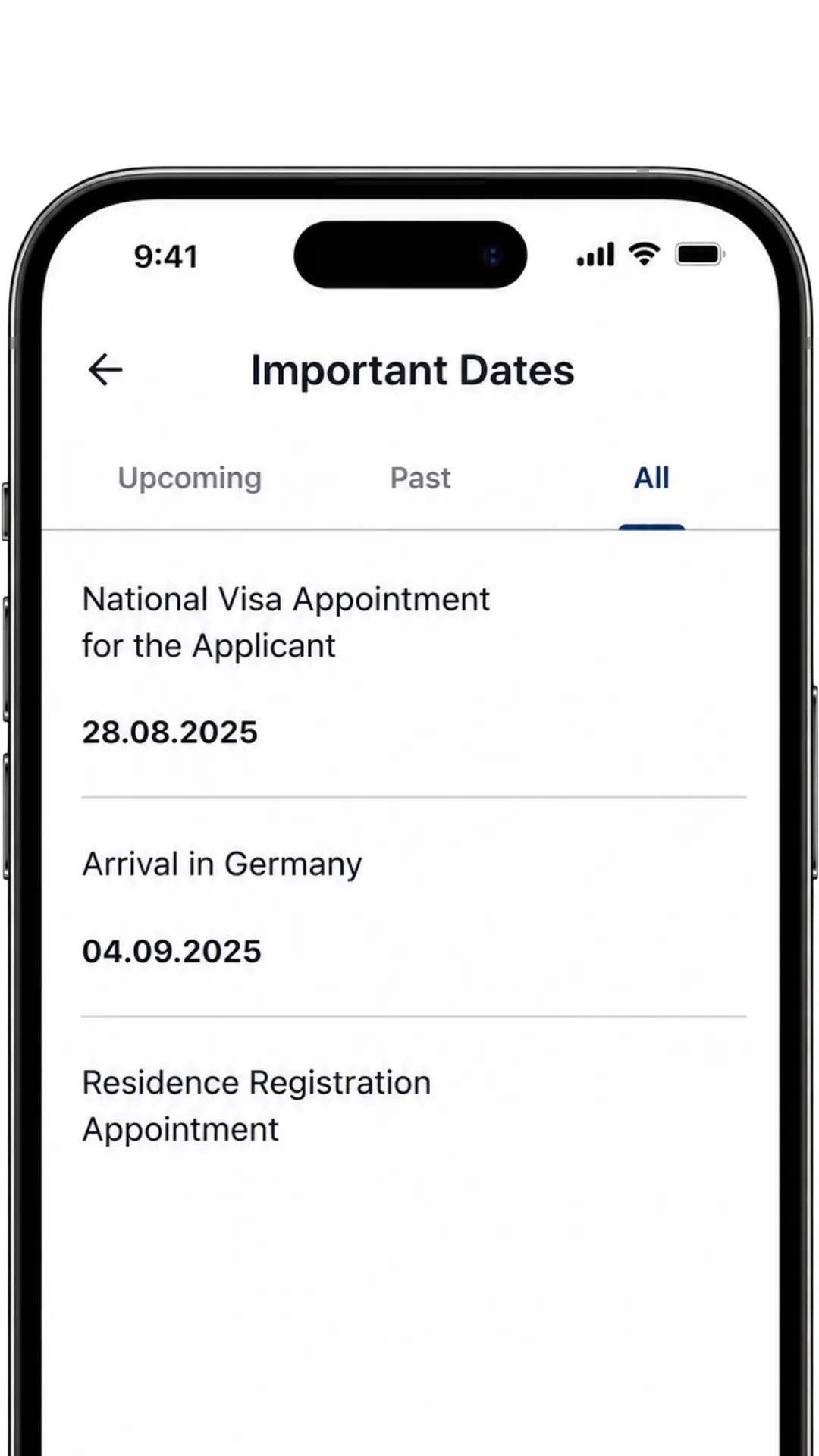
Download Our App!
Everything you need for relocating to Germany in one place: visa and document tracking, 24/7 chat with your personal manager, up-to-date adaptation tips, deadline reminders, and a personalized relocation plan — manage the entire process without calls or bureaucracy.