Leave your details and a comment
We'll contact you to arrange a convenient date and time.
EN
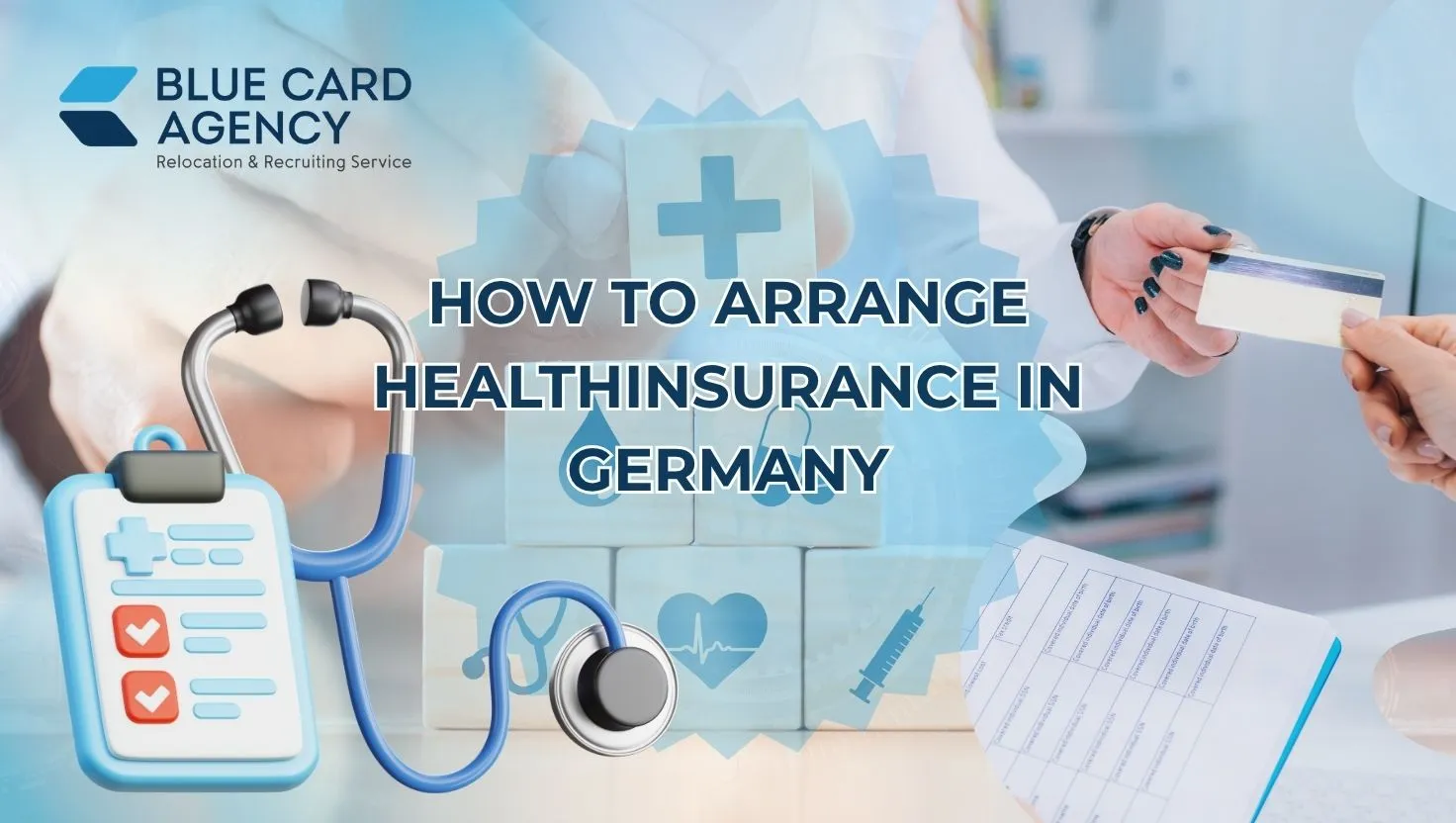
How to arrange health
insurance in Germany
Health insurance in Germany is mandatory for everyone who lives and works in the country, regardless of citizenship. This is a legal requirement:
not having insurance can lead to fines and denial of medical care. However, the system is fairly complex, especially for those who have just moved.
In this article, we explain what types of insurance are available, how to arrange them, how they differ, and how to choose the right option.
Contents
- Why health insurance is needed in Germany
- Who is required to arrange insurance
- How the insurance system works
- How to choose between GKV and PKV: pros and cons
- How to arrange health insurance: step by step
- What health insurance covers
- Changing health insurance provider: options and limitations
- Why arrange insurance with Blue Card Agency
- Frequently asked questions
Why health insurance is needed in Germany
Germany follows the principle of mandatory health insurance (Krankenversicherung).
This means that every person — citizen, resident, student, or employee — must be insured.
Without insurance:
❌ you will not be able to obtain a visa or residence permit;
❌ you may not be allowed to work or study;
❌ you may be left without medical assistance or treatment.
Not having insurance can result not only in fines, but also in serious problems accessing medical services. Even emergency care without insurance can lead to enormous costs.
Who is required to arrange insurance
Health insurance is mandatory for the following categories of people:
- German citizens;
- Foreign nationals working in Germany;
- Students;
- Freelancers and entrepreneurs;
- Benefit recipients;
- Foreign pensioners who have moved for permanent residence.
Important! Having health insurance is a mandatory condition for obtaining a visa or residence permit in Germany.
If you are just preparing to move and are not sure which insurance is right for your situation, Blue Card Agency will help you choose the best option.
This is especially relevant for students, Blue Card specialists and freelancers, for whom it is important to make the right choice from the start.
? For insurance questions, contact support@bluecardagency.de
How the insurance system works
The insurance system in Germany is divided into two main types:
1. Mandatory public insurance (Gesetzliche Krankenversicherung — GKV)
This is the main type of insurance, covering around 90% of Germany’s population. It operates on a classic solidarity model: those who earn more pay more, but services are the same for everyone. People with income below a certain threshold are required to have this type of insurance.
Key features of GKV:
- The payment is calculated as a percentage of income (in 2025 — on average 14.6% of gross salary + an additional contribution of around 2.5%);
- The contribution is split equally between the employee and employer;
- It covers standard medical services: doctor visits, hospital treatment, prescription medications, preventive care, and more;
- Free of charge extends to non-working family members (children, spouse) — family insurance (Familienversicherung). For children, insurance applies until age 18, and during education until age 23 or 25. For children with disabilities, coverage is unlimited. This significantly reduces the financial burden on families.
2. Private health insurance (Private Krankenversicherung — PKV)
This type of insurance is an alternative for certain categories:
- Self-employed people and entrepreneurs;
- Civil servants;
- People with income above the set threshold (in 2025 — 73,800 € per year);
- Students over 30 or after the 14th semester of study.
Key features of PKV:
- The contribution does not depend on income, but is calculated individually: based on age, health condition, and selected coverage;
- A wide range of additional services: private rooms, treatment by private doctors, extended dental care, treatment abroad;
- Often requires a medical questionnaire or an examination before the contract is concluded;
- Returning to GKV after PKV is extremely difficult, so the decision should be carefully considered.
How to choose between GKV and PKV: pros and cons
| Criterion | GKV (public) | PKV (private) |
| Cost | Depends on income, fixed percentage | Individual: age, health, options |
| Family insurance | Free for children and non-working spouses | Each family member is insured separately |
| Coverage | Basic services, standard dental care | Extended coverage, private clinics |
| Service speed | Standard, sometimes queues | Faster, private rooms |
| Return to GKV | Easy | Difficult |
| Bonuses and programs | Cashbacks, healthy lifestyle bonuses, prevention | Flexible options, personalized approach |
| Health requirements | No | Questionnaire and medical examination often required |
Voluntary health insurance (Freiwillige Krankenversicherung)
This is a form of insurance taken out voluntarily rather than because of a legal obligation. It usually applies to people who are not required to join the public insurance system (GKV), but still want to be insured through it rather than switching to the private system (PKV).
Who can access voluntary insurance:
- Employees with income above the set threshold for mandatory insurance — in 2025 this is 73,800 € per year (or 6,150 € gross per month).
- Self-employed people, entrepreneurs, students, pensioners, and civil servants who are not subject to mandatory insurance.
- People who have lost the right to mandatory insurance (for example, after changing jobs or status).
The contribution is calculated based on income, taking into account the established minimum and maximum limits: the minimum is 1,238.33 € per month (an increase compared with 2024), and the maximum is 5,512.50 € per month.
Voluntary insurance ends automatically if income falls below the threshold or the person leaves their job.
In this case, mandatory insurance status is restored.
Supplementary insurance (Zusatzversicherung)
To cover services not included in the basic GKV package, you can take out supplementary insurance. It helps reduce dental costs, get a private hospital room, access extended treatment, and cover other services not included in standard insurance.
Student insurance
Students under 30 or up to the 14th semester of study are required to arrange insurance. Public insurance at a reduced rate is usually chosen (around 120 euros per month). After reaching the age threshold, the options are either PKV or GKV under standard conditions.
| ? Blue Card Agency will refer you to trusted partners, who will help choose suitable health insurance based on your status, income, and relocation goals. You will receive support with choosing a tariff, preparing documents, and submitting the application. |
How to arrange health insurance: step by step
The application process is not difficult, but it requires attention when completing documents. Choosing the right insurance provider, collecting paperwork, submitting the application, and receiving the card can all take time, especially if you are doing it for the first time and do not know German.
Step 1: Determine the type of insurance
- If you are an employee with income below the threshold, choose GKV
- If you are a freelancer, civil servant, high-earning specialist, or student over 30, compare PKV and GKV
- If you do not fall into any category, consider FKV
Step 2: Choosing an insurance provider
- For GKV, compare offers from TK, AOK, Barmer, DAK, BKK and others. Pay attention to bonus programs, digital services, and whether support is available in English or Russian
- For PKV, use specialized websites and brokers (for example, Allianz, AXA, Debeka, HanseMerkur, Signal Iduna), compare tariffs, coverage terms, deductibles, and options for treatment abroad
? If you are not sure which option is right for you, we at Blue Card Agency will help assess all the pros and cons and choose insurance for your status.
Step 3: Prepare the documents
What you will need:
- Passport or ID card;
- Proof of residence registration (Meldebescheinigung);
- Employment contract or proof of status (for example, university enrollment certificate);
- Bank details (for contribution debits);
- For PKV: before concluding the contract, the insurer may require a health questionnaire or medical examination. Refusing to provide accurate information can lead to contract termination.
Step 4: Submit the application
Usually, the application can be submitted online or at the insurance company’s office. Many insurers offer forms and interfaces in English.
Step 5: Receive your insurance number and card
After submitting the application, you will receive:
✅ an individual insurance number;
✅ a plastic card (Gesundheitskarte) with a chip.
This card is your key to Germany’s healthcare system. You need to present it at every visit to a doctor, pharmacy, clinic, or hospital.
? See our detailed guide «How to arrange health insurance in Germany». Inside — a step-by-step application process, a list of insurers, supplementary insurance options, and plain-language explanations of complex terms. This is especially useful for those who do not want to spend hours figuring out bureaucratic details.
What health insurance covers
Public insurance (GKV):
- Appointments with general practitioners and specialists;
- Hospitalization;
- Surgical procedures;
- Tests and diagnostics;
- Partial dental services;
- Certain prescription medications;
- Preventive care (vaccinations, check-ups);
- Pregnancy care and childbirth.
Private insurance (PKV):
- Treatment by private doctors;
- Osteopath and naturopath services;
- Private rooms;
- Extended dental and ophthalmology care;
- Second opinions and additional diagnostics;
- Free glasses replacement;
- Private clinics and treatment abroad.
Changing health insurance provider: options and limitations
In the GKV system, you have the right to change insurance provider after 12 months of membership by submitting a transfer request with two months’ notice before the desired change date. You do not need to submit a separate cancellation request for the old contract — the insurance companies handle the formalities between themselves.
You can also change insurance early if:
- your current insurance provider increases the additional contribution (Zusatzbeitrag);
- your insurance status changes, for example when changing employer, moving from unemployment to work or the reverse, or when income changes above/below the mandatory insurance limit.
Returning from PKV to GKV is possible only under certain conditions
- if you are under 55 and switch to salaried employment with income below the set threshold;
- if you become unemployed and receive unemployment benefit;
- in a number of other exceptional cases, for example through family insurance of a spouse insured under GKV.
That is why choosing an insurance provider and type of insurance requires a well-considered decision.
Why arrange insurance with Blue Card Agency
We work with trusted partners who do more than explain how to arrange insurance — they help at every stage:
✅ Help you choose between GKV and PKV;
✅ Select an insurer based on your status and budget;
✅ Translate questionnaires and forms;
✅ Support you until you receive your Gesundheitskarte.
Blue Card Agency provides comprehensive support for moving to Germany: from visas to insurance and housing.
? 5+ years of experience supporting relocations across Germany? More than 1,000 successful cases for families with children? A personal coordinator for every family? 24/7 support before and after the move? Preparation and review of all documents
And for independent steps, visit our guide shop with step-by-step guides on arranging insurance, residence permits, renting housing, and other important topics.
Frequently asked questions
Can I choose any insurance provider?
Yes, in the GKV system you have the right to choose any health insurance fund — the differences mainly concern service, apps, and bonus programs. When choosing private insurance, it is important to consider your age, health condition and the contents of the insurance package — these factors determine the cost and availability of terms. For help choosing insurance, write to support@bluecardagency.de.
Can I arrange insurance remotely before moving?
Yes! Many insurers accept online applications.
How much does insurance cost in Germany?
In 2025, GKV contributions average from 120 to 220 € per month. The employer pays half of this amount. The higher the salary, the higher the contribution, but there is an upper limit.
PKV starts at around 170–250 € per month, but can be significantly higher — it all depends on your age, health condition, and selected options. PKV may be more cost-effective for young, healthy, high-earning specialists — but it is less flexible in the long term.
What should I do if I get sick or have an accident without insurance?
Emergency care will be provided, but you will have to pay all costs yourself. To avoid major expenses and legal problems, arrange insurance as soon as possible. It is important to do this before or immediately after arrival.
Read also
-
Which Residence Permits Are Available to Ukrainians Under §24—and Which…
-
-

Finding Accommodation in Berlin and Anmeldung: A Complete Guide for…
-

How to Relocate from UAE and Gulf Countries to Germany:…
-

Switching from Section 24: Opportunities, Not Obstacles! Switching from Section…
-

Download Our App!
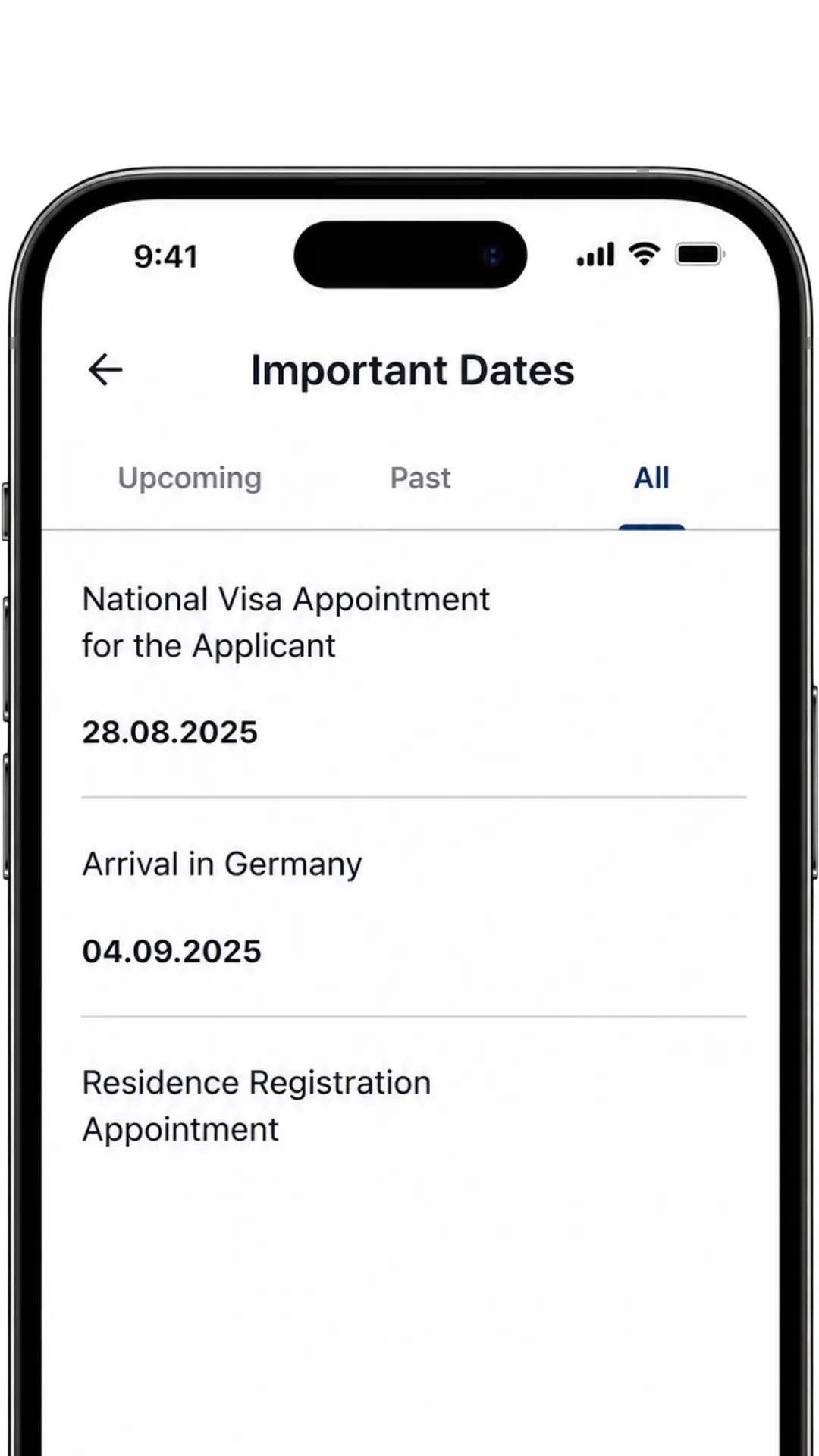
Everything you need for relocating to Germany in one place: visa and document tracking, 24/7 chat with your personal manager, up-to-date adaptation tips, deadline reminders, and a personalized relocation plan — manage the entire process without calls or bureaucracy.