Leave your details and a comment
We'll contact you to arrange a convenient date and time.
EN
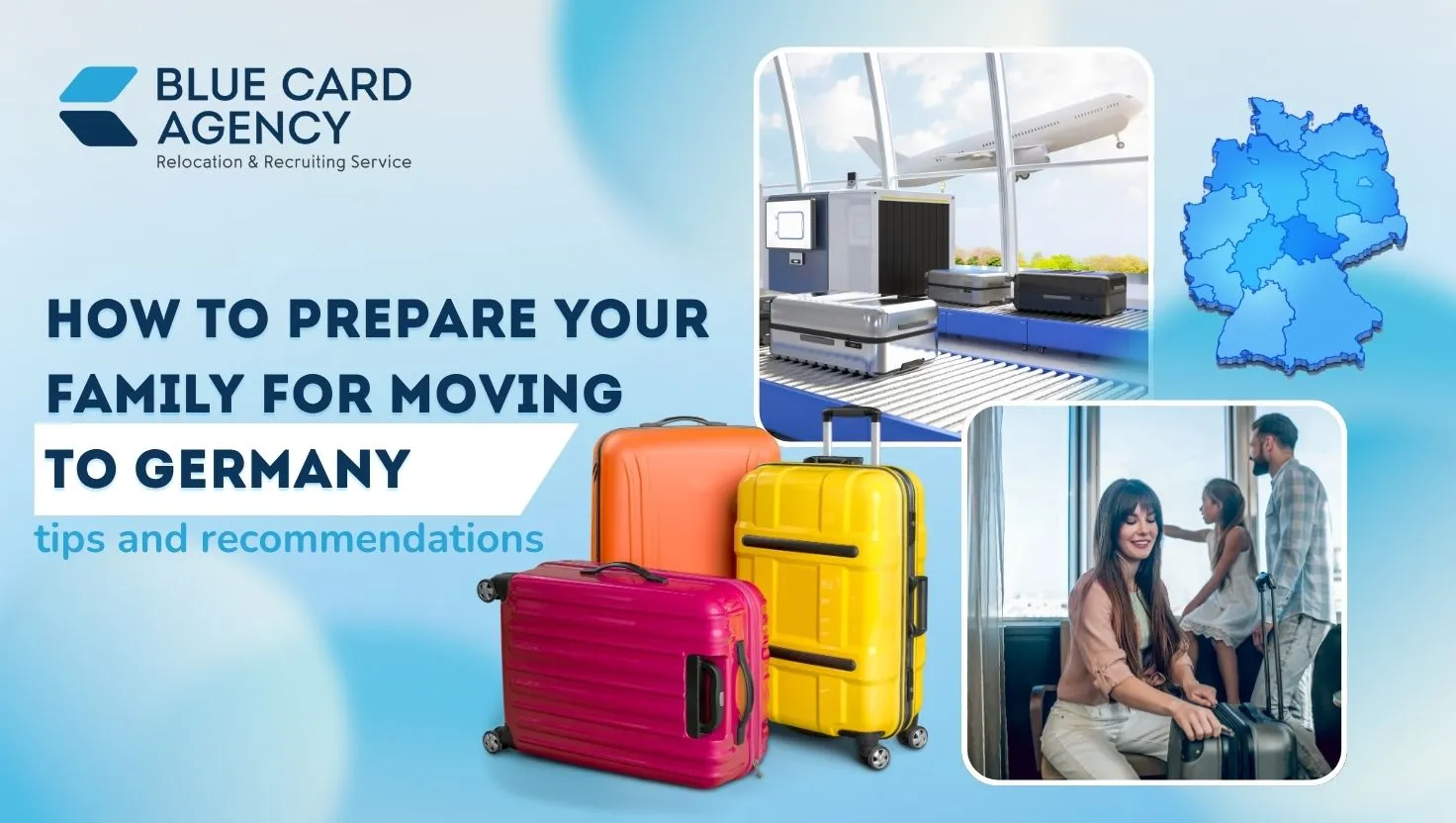
How to prepare your family for moving
to Germany: tips and recommendations
Moving to another country is an important and exciting stage in every family’s life. This is especially true when moving to Germany, a country with a high standard of living, well-developed infrastructure, and strict rules. To make the adjustment as smooth as possible, it is important to think through every detail in advance and prepare your family for the changes ahead.
In this article, we will cover the key stages of preparation and share tips and recommendations to help make your move more organized and comfortable.
Contents
- Planning the move: where should you start?
- Family reunification visa?
- Collecting and preparing documents
- Finding and renting housing
- Preparing children for the move
- Schools and kindergartens in Germany
- Healthcare and insurance
- Integration and adaptation
- Financial preparation
- Organizing the move of your belongings
- Common mistakes and how to avoid them
- Support from Blue Card Agency
- Frequently asked questions
Planning the move: where should you start?
Moving abroad requires careful preparation. Define your goals: how long you plan to move for — temporarily or permanently, why you are moving, and from which country. This is important for understanding which requirements Germany applies to immigrants in your specific situation.
The basis for your move determines the type of visa, the required documents and the processing timeline.
The most common reasons for moving are:
- Employment under a contract (work visa or Blue Card);
- Family reunification;
- Study or research activity;
- Starting a business / freelancing;
- Au Pair program for young people;
- Medical treatment;
- Chancenkarte — job search visa.
? Blue Card Agency provides consultations to identify the right visa type and assess your chances.
We do more than give advice — we guide you step by step from planning to integration.
Family reunification visa?
If one family member already lives in Germany legally — whether on a work visa, Blue Card EU, or another residence permit — they have the right to apply for family reunification (Familiennachzug). This is one of the most in-demand and reliable ways to relocate. However, it is important to keep the exceptions in mind:
❌ The following cannot bring family members under reunification:
- Students (holders of a national visa for study purposes)
- Holders of an Au Pair visa
- Holders of the Chancenkarte (Aufenthaltserlaubnis nach § 25b AufenthG)
- Participants in certain volunteer programs
Highly qualified specialists who have received a Blue Card (Blue Card EU) benefit from simplified conditions for moving with their family:
- No A1 language requirement for spouses;
- Work authorization for the spouse without restrictions (immediately after the move);
- Simplified application procedure and document review;
- Fast processing — often within 4–8 weeks.
This makes the Blue Card program one of the most attractive options for highly qualified specialists planning to move to Germany with their whole family.
Blue Card Agency will help prepare all documents for you and your family quickly and without mistakes — in line with the current 2025 requirements. See our detailed guide “How to get a Blue Card in Germany”, which includes real cases, practical tips, and step-by-step recommendations.
| In our guide shop you will also find other practical guides: ? how to apply for residence permit in Germany, ? how to obtain Kindergeld child benefit, ? how to get a driving license and much more. |
Main requirements for obtaining a family reunification visa:
- Proof of family relationship;
- Sufficient income to support the family;
- Proof of housing (rental agreement);
- Language knowledge for spouses of at least A1 level (CEFR).
Requirements may vary depending on the applicant’s citizenship and residence status.
Special considerations for parents moving
Parents can move to adult children only in exceptional circumstances (for example, serious hardship). For minor children and their parents, the procedure is simpler, but it requires proof that the second parent is not in Germany or is unable to fulfill parental responsibilities.
Collecting and preparing documents
In addition to an international passport and photos, a visa application will require other important documents — proof of income, qualifications, marital status, and more. For children, birth certificates, medical certificates, and parental consent may also be required when applicable.
Every situation is individual, and the right document package is the key to a successful and fast visa process.
To help you avoid confusion and mistakes, we have prepared ready-made checklists and instructions.
? With Blue Card Agency, you receive a ready-made document checklist and support with translations, apostilles, and correctly completed application forms to avoid embassy delays.
Finding and renting housing
Finding suitable housing is one of the most important stages of preparing to move to Germany. The comfort of your whole family in the new country largely depends on successfully solving this issue.
What to pay attention to:
- Location. Choose an area based on proximity to work, educational institutions (schools, kindergartens), safety, and overall infrastructure.
- Transport accessibility. Convenient connections to other areas and access to public transport.
- Infrastructure. Shops, pharmacies, medical facilities, sports centers, and leisure facilities should be nearby.
- Type of housing. Apartment, house, or temporary accommodation for the first period.
- Size and cost. Housing should fit both your family size and your budget. It is important to consider that Germany has space standards: each person over six years old should have at least 12 sq. m, each child under six years old — 10 sq. m. Children under 2 years old are not counted.
Important: In major cities such as Berlin, Munich, or Frankfurt, finding suitable housing can be difficult because of high demand, so be ready to make quick decisions and communicate actively with landlords.
Tips for finding housing:
✅ Start looking for housing in advance — even before the move, especially if you are relocating with family. A good first option is a short-term rental (for example, through Airbnb or Wunderflats), and once you arrive, you can calmly search for a long-term apartment.
✅ Please note: many apartments in Germany are rented unfurnished, and not every address allows registration (Anmeldung) — which is mandatory for obtaining a tax number, insurance, and other documents.
✅ To save time and avoid common mistakes, we recommend reading our detailed guide “How to rent an apartment in Germany long-term” — it explains where and how to search for housing, what to pay attention to, how to communicate with landlords, and which documents to prepare.
Additional support
Finding the right apartment in Germany is one of the most important stages when moving with a family. A successful housing choice directly affects how comfortable the adaptation process feels and the overall impression of your new life.
Blue Card Agency specialists advise on all rental matters and offer ready housing options from our own catalog and trusted partners — tailored to your budget, family composition, and preferences.
Preparing children for the move
Preparation is an important stage of its own:
- Conversations about the move. Explain openly to your children why the family is moving and what opportunities await them.
- Choosing a school or kindergarten. In Germany, children are required to attend school. Educational institutions can be public or private. School enrollment is handled through local authorities.
- Learning the language. Early exposure to German will make adaptation much easier for children.
- Emotional support. It is important to take children’s possible fears and worries seriously and support them during the adjustment process.
Sometimes it is worth consulting a psychologist who specializes in migration and children’s adaptation.
Schools and kindergartens in Germany
In Germany, children are required to attend school. The education system offers a wide range of institutions: from public schools to private and international schools. Most German children attend public schools, which are free and provide a high educational standard.
Private and international schools offer additional opportunities, such as bilingual programs and instruction in English, but they charge tuition and often require entrance assessments.
Choosing a school or kindergarten in Germany is a responsible step that requires careful research of all available options and advance planning. It also depends on the child’s age, language skills, and family preferences.
The right educational institution will help your child adapt successfully and unlock their potential in the new country.
School enrollment procedure
A child’s school enrollment starts with the family’s residence registration (Anmeldung). After that, local authorities or the school education office determine which school and class the child will attend, taking into account age, German language level, and, if necessary, the results of a medical examination.
Parents are advised to explore the educational options in the area in advance, attend open days, and speak with school administration. It is important to check whether the school offers additional language courses and support for migrant children, as this greatly eases integration into the new educational environment.
Kindergarten enrollment (Kindergarten, Kita)
Germany has public and private kindergartens, nurseries for small children (Krippe), and after-school care centers for schoolchildren (Hort). You can apply through municipal online platforms, directly at the institution, or through the youth welfare office (Jugendamt). Places are often limited, so it is better to apply early and to several kindergartens.
Blue Card Agency provides a step-by-step guide to kindergarten enrollment in Germany. Learn more at the link: How to enroll a child in kindergarten in Germany.
Healthcare and insurance
Health insurance is mandatory for every family member. At the visa stage, you will need to arrange incoming insurance; after registering in Germany, you must choose and join a public or private health insurance provider.
There are two main types of insurance:
- Public insurance (GKV): suitable for most employees and their families.
- Private insurance (PKV): intended for self-employed people, high-earning specialists, and certain categories of students.
Blue Card Agency offers consultations on choosing the right type of insurance and helps prepare the necessary documents.
| And so you can understand the details yourself, see our detailed guide «How to arrange health insurance in Germany». Recommendations for choosing a provider, a step-by-step application process, and a document checklist — everything you need for a confident start. |
Integration and adaptation
Language learning
Basic knowledge of German is essential for successful adaptation. It is recommended to take intensive courses before the move and continue learning after arrival. Knowing the language will make it easier to find work, communicate with locals, visit government offices, and integrate children into the education system.
Even if you plan to live in major cities where many people speak English, knowing German remains important for:
- Finding work
- Visiting government offices
- Studying at school and university
- Communicating with locals
- Obtaining permanent residence (language level from B1) and German citizenship
How to prepare:
- German language courses online or offline
- Tutors
- Language learning apps
- Conversation clubs and language tandems
Cultural adaptation
Moving to a new country comes with cultural differences. Culture shock is normal. It is important to be open to new traditions and customs. Support each other as a family and give yourselves time to adjust to the new reality.
Participating in local events and communicating with residents helps you adapt faster.
Do not hesitate to seek support from migration consultants, psychologists, or Russian-speaking communities in Germany.
Financial preparation
Even if you have an employment contract or other sources of income, it is recommended to have a financial cushion for the first period.
A move requires a well-thought-out financial plan:
- German bank account. Most German banks require personal presence and residence registration (Anmeldung).
Therefore, plan to open an account within the first few days after arrival. - Financial cushion. It is recommended to have an amount that covers 3–6 months of living expenses.
- Money transfers. Research cost-effective ways to transfer money abroad.
- Expense planning. Make a list of essential expenses: rent, insurance, transport, groceries, mobile service, kindergarten/school.
Please note: Germany has high taxes and mandatory contributions (health insurance, pension contributions, etc.).
Organizing the move of your belongings
What should you do with your belongings?
- Decide what to bring and what to buy locally;
- Pack documents, electronics, clothes, toys;
- Choose a moving company. International companies offer comprehensive services, including packing, delivery, and customs paperwork;
- Be sure to insure valuable items;
- Define delivery timelines. Keep in mind that delivery of belongings can take from several weeks to several months.
Common mistakes and how to avoid them
⛔ Underestimating how difficult housing search can be: start looking as early as possible.
⛔ No residence registration: without it, legalizing your stay in the country is impossible.
⛔ Insufficient language level: invest time in learning German.
⛔ Insufficient financial preparation: plan your budget with a reserve.
⛔ Preparing documents at the last minute: prepare them in advance and take processing times into account.
Moving to Germany with your family is not only a challenge, but also a chance to start a new chapter in life. The better prepared you are, the easier adaptation will be. Support from loved ones, a clear plan, and professional help are the key to a calmer move.
By following our recommendations, you can make the move much easier and integrate into your new life faster.
Support from Blue Card Agency
Blue Card Agency means 5+ years of experience, a team of 30+ experts, and more than 1,000 families who have successfully completed their relocation journey. We provide comprehensive support for families who want to move to Germany:
? Personal consultations on visas, housing search, choosing schools and kindergartens, and health insurance.
? Ready-made guides — step-by-step guides on all key topics: how to obtain citizenship or a residence permit, what to do in case of dismissal or redundancy in Germany.
These and other materials are available in our guide shop.
? Support at every stage of the move, including integration, Anmeldung, opening accounts, insurance, and much more.
Working across Germany, we are always nearby and ready to help wherever you are.
? Housing selection. See our online apartment catalog, which includes properties from the agency’s own portfolio and offers from trusted partners. Our specialists will help select and arrange housing according to your requirements and support the process through address registration.
Turn your move from stress into opportunity.
Frequently asked questions
Do I need to arrange insurance before moving?
Yes, health insurance is mandatory for obtaining a visa and residence permit.
Can I move without knowing German?
Formally, yes, but it will make adaptation much harder. We recommend starting to learn in advance.
How quickly can I find a job after moving?
It all depends on your profession, language level, and region. In some fields, such as IT, you can find a job even before moving.
How long does paperwork take in Germany?
Registration and preparation of the main documents usually take from several weeks to a couple of months.
How difficult is it for children to adapt to a German school?
Children usually adapt faster, especially if they start learning the language in advance. Some schools have special preparatory classes for migrant children.
How do I enroll a child in kindergarten?
Register in the Kita-Portal system or through Jugendamt. It is better to apply to several institutions at once.
Read also
-
Which Residence Permits Are Available to Ukrainians Under §24—and Which…
-
-
Finding Accommodation in Berlin and Anmeldung: A Complete Guide for…
-

How to Relocate from UAE and Gulf Countries to Germany:…
-
Switching from Section 24: Opportunities, Not Obstacles! Switching from Section…
-

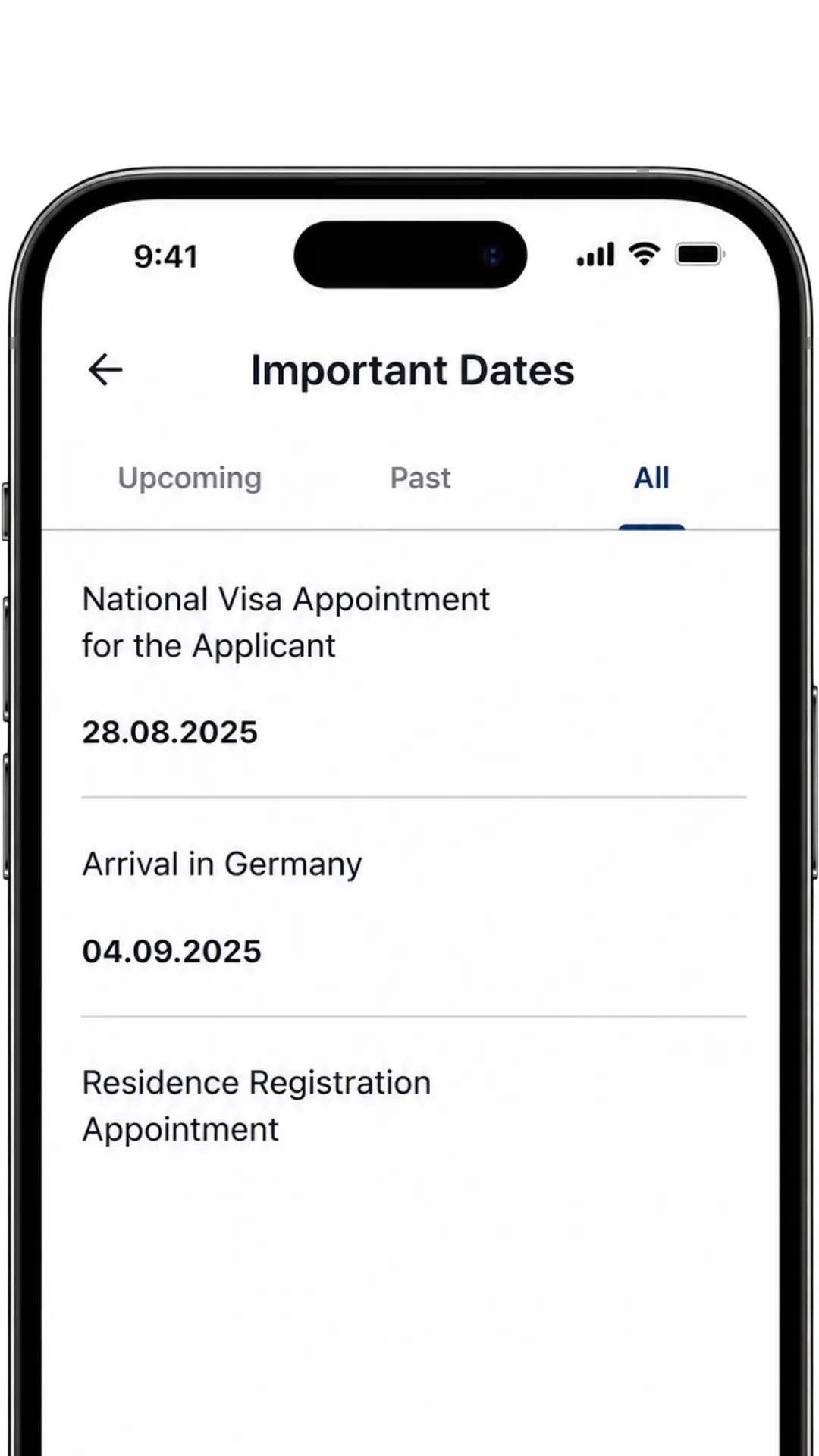
Download Our App!
Everything you need for relocating to Germany in one place: visa and document tracking, 24/7 chat with your personal manager, up-to-date adaptation tips, deadline reminders, and a personalized relocation plan — manage the entire process without calls or bureaucracy.