Leave your details and a comment
We'll contact you to arrange a convenient date and time.

EN
Step-by-step plan
Moving to Germany for foreigners
Moving to Germany is a major and responsible step. If you approach it chaotically, it is easy to get lost in documents, visas, and everyday details. But if you prepare a step-by-step plan for moving to Germany for foreigners, the process becomes manageable and clear. This guide is suitable for all legal relocation paths: work, study, Chancenkarte, freelancing, family reunification, humanitarian programs, or special programs such as internships and relocations.
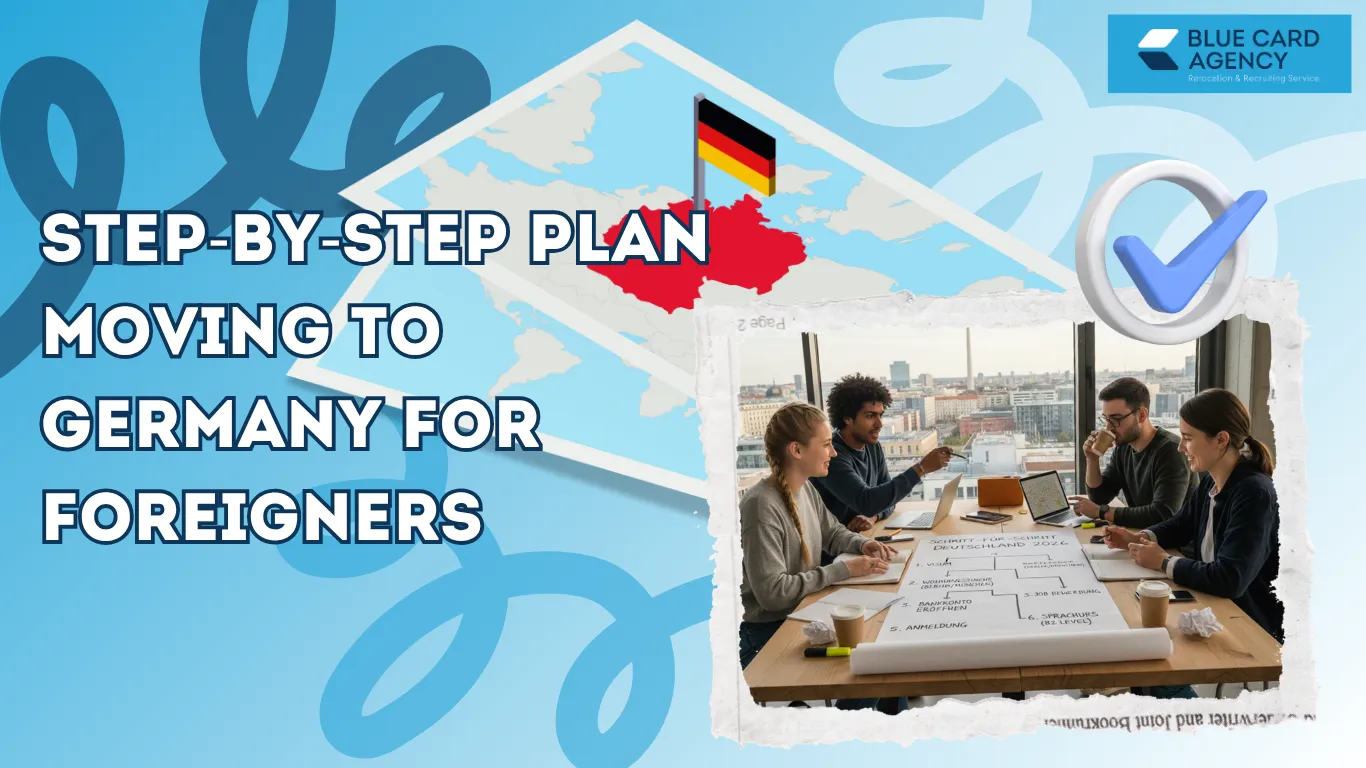
Step 1. Define the purpose of your move
The first thing to understand is why you are going, because this will shape your relocation plan for Germany as a foreigner: the visa type, document list, and next steps.
Examples of goals:
- Work: a contract with a company, Blue Card, or Chancenkarte.
- Freelance / self-employment: working for yourself, remote clients, creative projects.
- Study: university, language courses, educational programs.
- Family reunification: moving to join a spouse, children, or parents.
- Humanitarian and resettlement programs: temporary protection, refugees, humanitarian visas.
- Special programs: internships, relocation, cultural exchanges.
Tip: a clear goal will help you stay focused and collect exactly the documents needed for your case.
Step 2. Prepare your documents
Documents are the foundation of a successful move. Every type of visa has a specific document package, and it naturally differs depending on the basis for the visa.
For example: if you are going to study, prepare your admission letter, bank statements, and insurance so you can present everything at the visa center right away.
You may need:
- international passport
- proof of financial resources (savings, employment certificates, bank statements)
- health insurance
- diplomas, certificates, CV, or portfolio
- documents confirming the purpose of the move (contract, admission letter, proof of family relationship, resettlement status documents)
Tip: translate documents into German, notarize them, and obtain apostilles if needed.
Check official sources for the list of required documents for your specific visa type to make sure it is correct. For example,
Make it in Germany and Auswärtiges Amt.
We have already prepared checklists and instructions so you do not get confused or make mistakes.
Step 3. Work toward the purpose of your move
Every case is unique here:
- Work / Blue Card / Chancenkarte: search for vacancies on LinkedIn, specialized portals, or through recruitment agencies. Prepare your CV in German and English.
- Freelance / self-employment: collect a portfolio and proof of income. If you provide services online, prepare letters from clients. You will also need a business plan and letters of intent.
- Study: confirm admission and finances. You will also need to show the required amount in a blocked account (Sperrkonto).
- Family reunification: collect all documents on family relationship, housing, and income.
- Humanitarian programs: confirm your status with the immigration authority and follow the instructions for applying for a visa or residence permit.
- Special programs: check the conditions of the specific program on official websites.
Tip: collect documents in advance so you do not waste time on corrections and clarifications during submission.
Step 4. Find housing and plan your budget
At first, it is better to choose temporary housing so you can calmly explore the area. Then look for a permanent apartment, taking transport and infrastructure into account.
Your budget for the first months should include rent, deposit, food, transport, phone and internet, and insurance. A 3–6 month reserve will help you feel more secure, especially if you are looking for work after arrival.
Example: if you arrived with the Chancenkarte and plan to find a job within two months, a reserve will allow you to live in an apartment and cover all basic expenses until you sign your first contract.
Step 5. What to do after arrival
- Register your address (Anmeldung)
- Open a bank account
- Arrange health insurance
- Get a tax number (Steuer-ID)
- Set up internet and mobile service
Tip: book appointments with authorities in advance. In large cities, waiting times can be several weeks.
Step 6. Taxes and finances
- Get a tax identification number, even if you are not working yet.
- Understand the tax withholding and reporting system.
- Understanding financial rules helps you plan expenses and avoid fines.
Step 7. Apply for a residence permit
After a certain period of stay, you need to apply for a temporary residence permit.
Documents usually include a valid visa, proof of the purpose of stay, financial guarantees, insurance, and proof of housing.
Meet the submission deadlines to maintain legal status and avoid problems.
Step 8. Adaptation and integration
- Start learning German at least at a basic level. It makes everyday life much easier.
- Enroll in integration courses, communicate with locals, and attend events.
- Support from other immigrants makes everyday and legal issues easier to handle.
Example: even a basic language level allows you to visit a bank, register at a clinic, or speak with a landlord on your own.
Summary
We prepared this detailed plan for moving to Germany to turn a complex process into a clear route. Regardless of visa type, proper preparation reduces stress, helps avoid mistakes, and makes it easier to feel at home sooner.
Support from Blue Card Agency
Blue Card Agency — more than 5 years of practical experience, a team of 30+ specialists, and 1,000+ families who have already moved to Germany successfully with our support.
We support every stage of relocation — from document preparation to integration — taking over the key organizational tasks. We work across Germany and always stay in touch.
Start preparing for your move now — book a consultation and get a clear action plan.
Read also
-
Which Residence Permits Are Available to Ukrainians Under §24—and Which…
-
-
Finding Accommodation in Berlin and Anmeldung: A Complete Guide for…
-

How to Relocate from UAE and Gulf Countries to Germany:…
-
Switching from Section 24: Opportunities, Not Obstacles! Switching from Section…
-

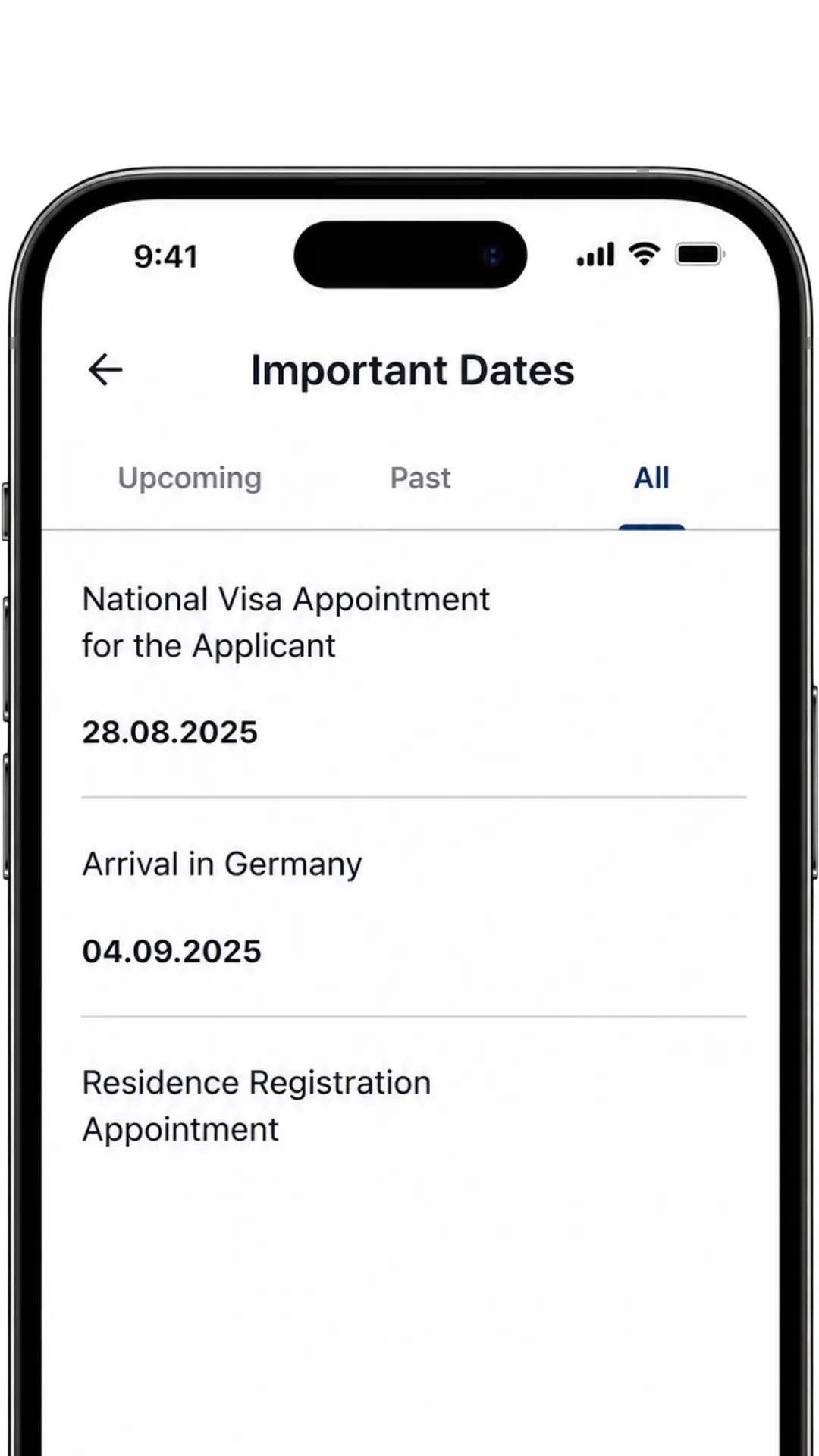
Download Our App!
Everything you need for relocating to Germany in one place: visa and document tracking, 24/7 chat with your personal manager, up-to-date adaptation tips, deadline reminders, and a personalized relocation plan — manage the entire process without calls or bureaucracy.