Leave your details and a comment
We'll contact you to arrange a convenient date and time.
EN
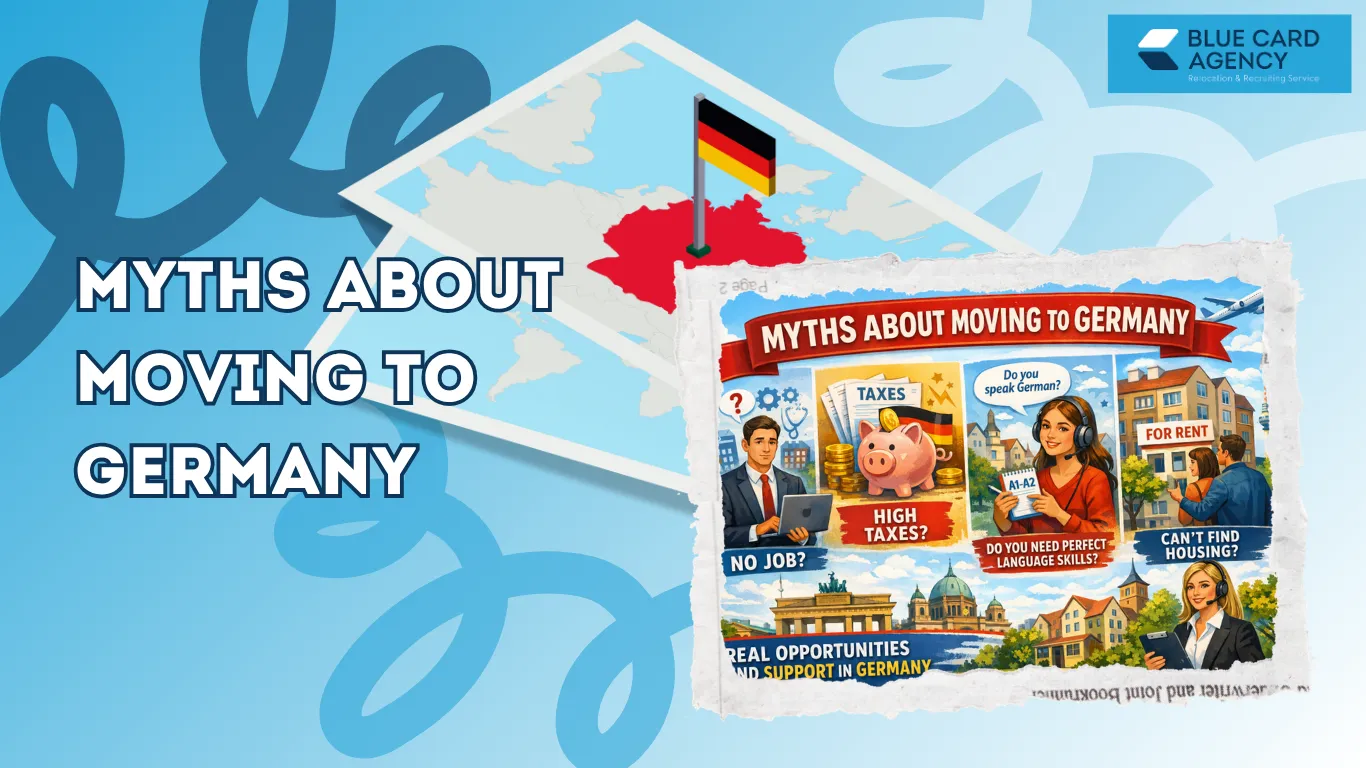
Myths about moving to Germany
Moving to another country is almost always surrounded by worries, other people’s stories, and sweeping conclusions. Germany is no exception. Online, people actively discuss myths about moving to Germany, which create either inflated expectations or unjustified fears.
Some describe it as a “country of opportunity”; others talk about bureaucracy and disappointment. As usual, the truth is somewhere in the middle. To prepare for relocation consciously, it is important to understand which claims are based on facts and which are driven by emotions.
Myths about Germany: “Finding a job is almost impossible”
One of the most common fears is a closed labor market. It can seem that foreigners struggle to break through and that employers prefer only citizens of the country.
In practice, Germany has been facing a shortage of specialists for several years. This is especially true in IT, engineering, healthcare, technical roles, and skilled trades. Companies are interested in attracting talent, including from abroad.
Yes, competition exists, especially in major cities. However, the idea that employment is impossible belongs to the category of myths about Germany, not objective reality. Difficulties more often arise from the lack of a well-thought-out strategy: the CV is not adapted to the market, the diploma is not recognized, or the language level does not match the position.
A prepared candidate with a clear professional profile has a real chance of finding a job.
Myths about life in Germany: “Taxes are too high here”
The phrase “the state takes half your salary” is heard often. Indeed, the tax burden is noticeable, especially for single employees without children.
However, along with taxes, a person gains access to the healthcare system, pension contributions, unemployment insurance, social protection, and developed infrastructure. This is important to consider when discussing myths about life in Germany.
If you look only at the size of deductions, the picture will be one-sided. If you look at quality of life, safety, roads, education, and healthcare, the perception changes. The question is not only how much tax is paid, but also what a person receives in return.
Common myths about moving to Germany:
“Nothing will work without perfect German”
German is genuinely important, especially for long-term integration. However, the claim that it is impossible to start a career without fluent German belongs among the common myths about moving to Germany.
In international companies, English is often the working language. In IT and technical fields, initial German requirements may be moderate. Many specialists start working with a basic level and improve it gradually.
Of course, knowing the language speeds up adaptation: it makes communication with authorities, doctors, and landlords easier. But it is a growth tool, not an absolute barrier.
Myths about moving to Germany: “Finding housing is impossible”
Many people view switching from Paragraph 24 to Ausbildung as one way to regularize their stay in Germany.
The rental market in Berlin, Munich, or Hamburg is genuinely tight. There are many viewings, few responses, and the wait can drag on.
But the claim that housing is impossible to find is an exaggeration. The search requires time, a carefully prepared document package, and flexibility in choosing an area. It is important to understand the rules of the market: proof of income, Schufa, and proper communication.
Many myths about moving to Germany arise from underestimating organizational preparation. When the process is structured, the task becomes difficult but manageable.
Myths about Germany: “The state will provide everything”
There is also the opposite extreme: expecting full financial support. Yes, Germany’s social system is well developed. But it is not designed to support a person without grounds.
Support is regulated by strict rules and intended for specific situations. Long-term financial stability is built on employment and planning. That is why such myths about Germany create unrealistic expectations.
Summary: why it is important to filter information
Almost all myths about life in Germany are formed from individual cases or emotional experiences. Someone encountered bureaucracy and became disappointed; someone found a job quickly and shares an inspiring story.
Reality is more nuanced. Germany has bureaucracy, high document requirements, and the need to adapt. But it also offers stability, clear rules, protection of workers’ rights, and a transparent system.
The main thing is not to build expectations on extremes. Preparation, understanding the law, and a realistic assessment of your own resources significantly increase the chances of successful integration.
Consultation before moving
If you want to understand which common myths about moving to Germany are not true and which are based on real requirements, it is important to rely on current data.
Blue Card Agency helps assess your situation, choose the best relocation path, and avoid strategic mistakes.
Book a consultation and get an objective overview, a clear action plan, and confidence before moving to Germany.
Read also
-
Which Residence Permits Are Available to Ukrainians Under §24—and Which…
-
-
Finding Accommodation in Berlin and Anmeldung: A Complete Guide for…
-

How to Relocate from UAE and Gulf Countries to Germany:…
-
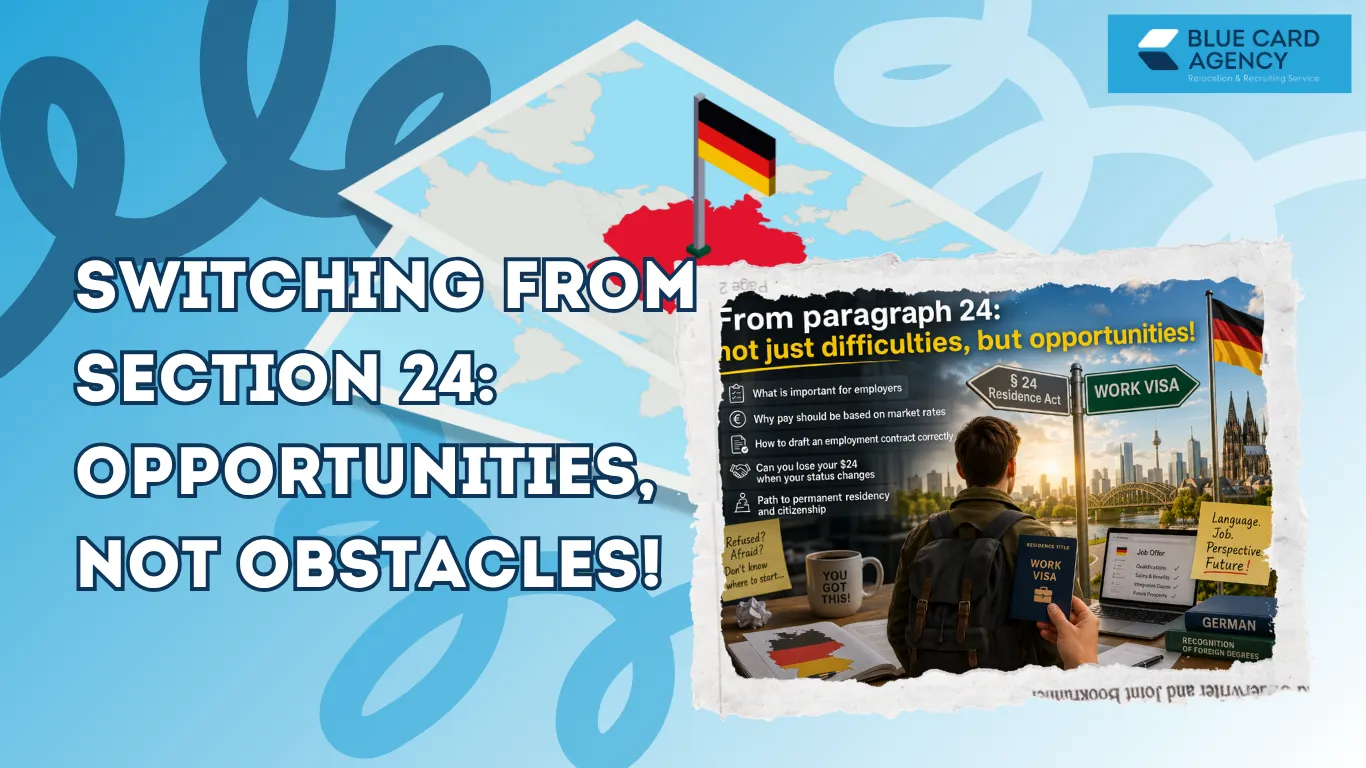
Switching from Section 24: Opportunities, Not Obstacles! Switching from Section…
-
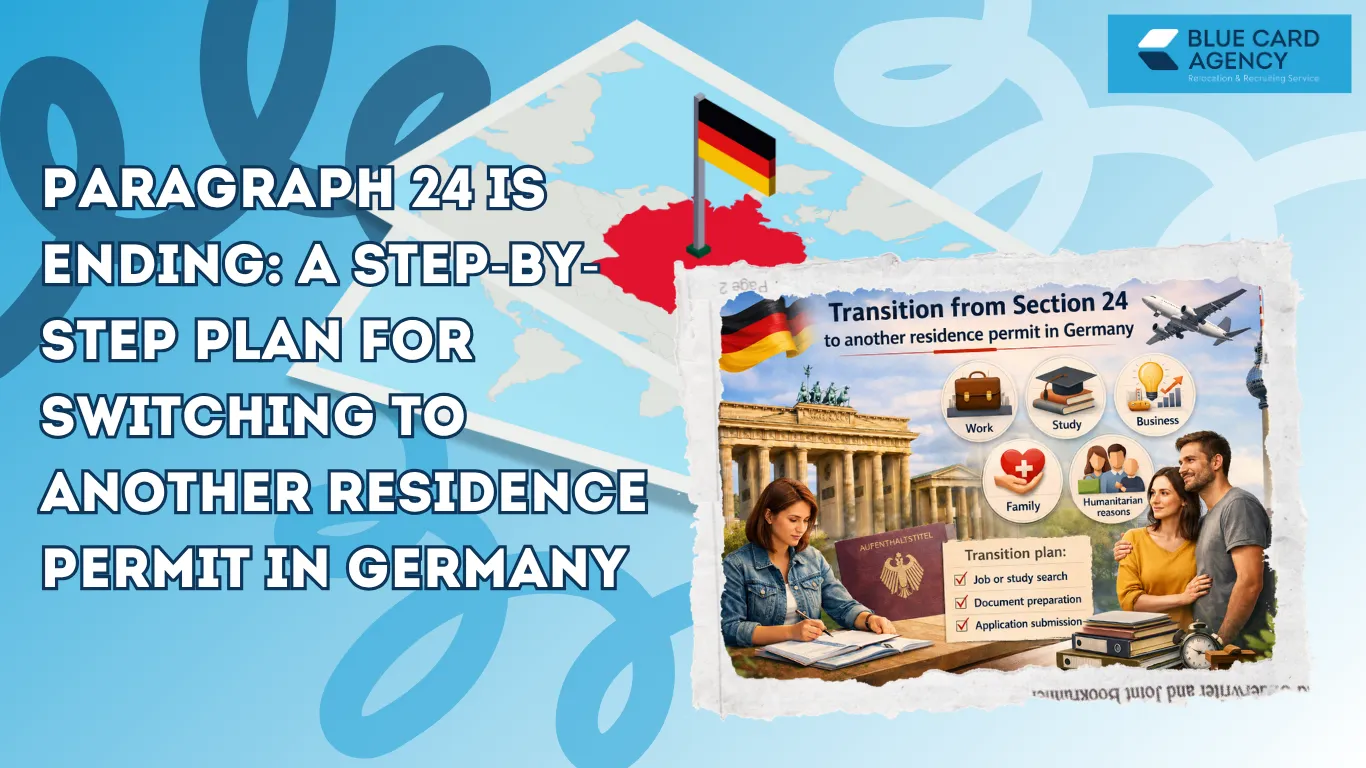
Paragraph 24 is ending: a step-by-step plan for switching to…

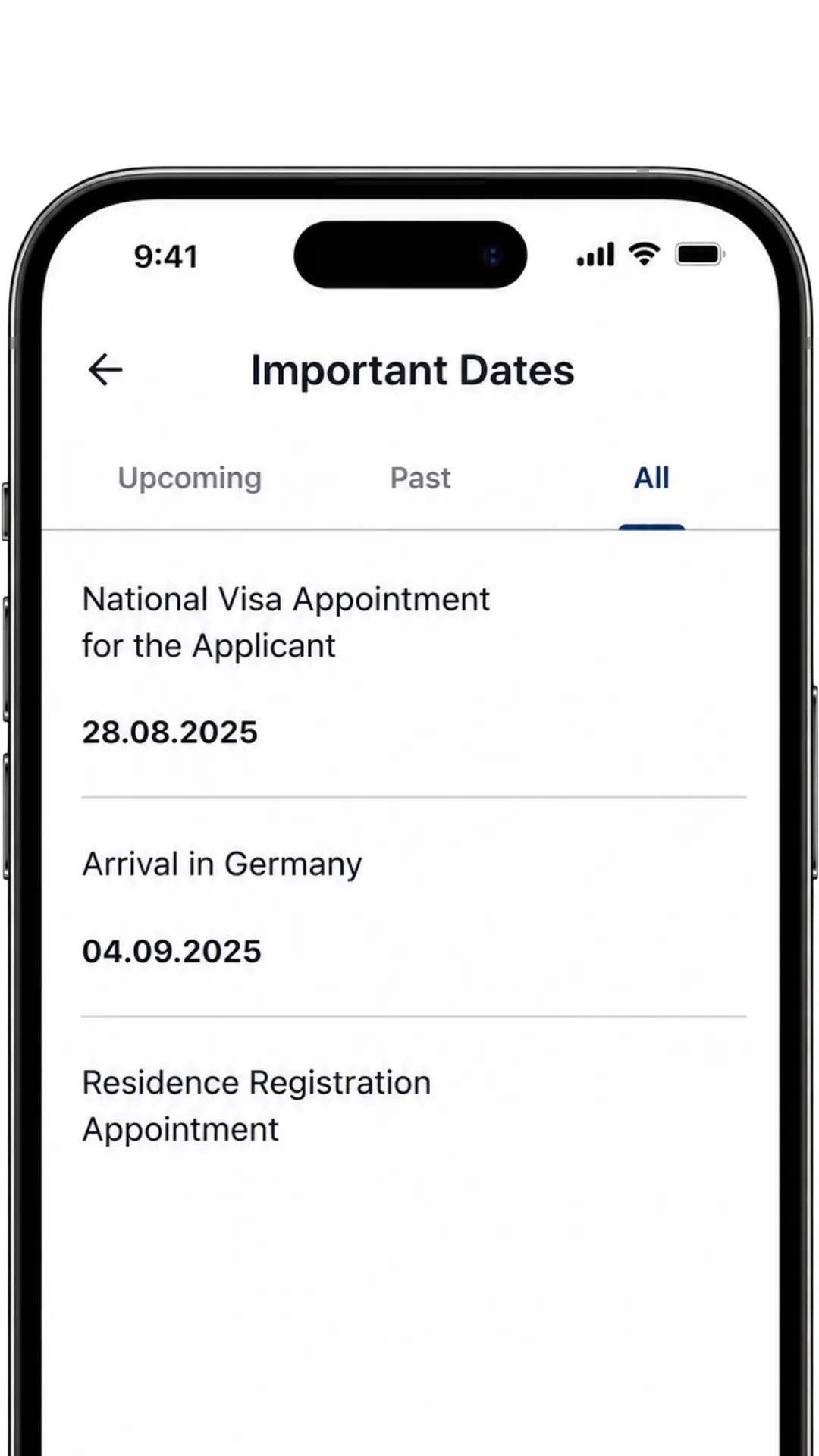
Download Our App!
Everything you need for relocating to Germany in one place: visa and document tracking, 24/7 chat with your personal manager, up-to-date adaptation tips, deadline reminders, and a personalized relocation plan — manage the entire process without calls or bureaucracy.