Leave your details and a comment
We'll contact you to arrange a convenient date and time.

EN
Finding Accommodation in Berlin and Anmeldung: A Complete Guide for Expats in 2026
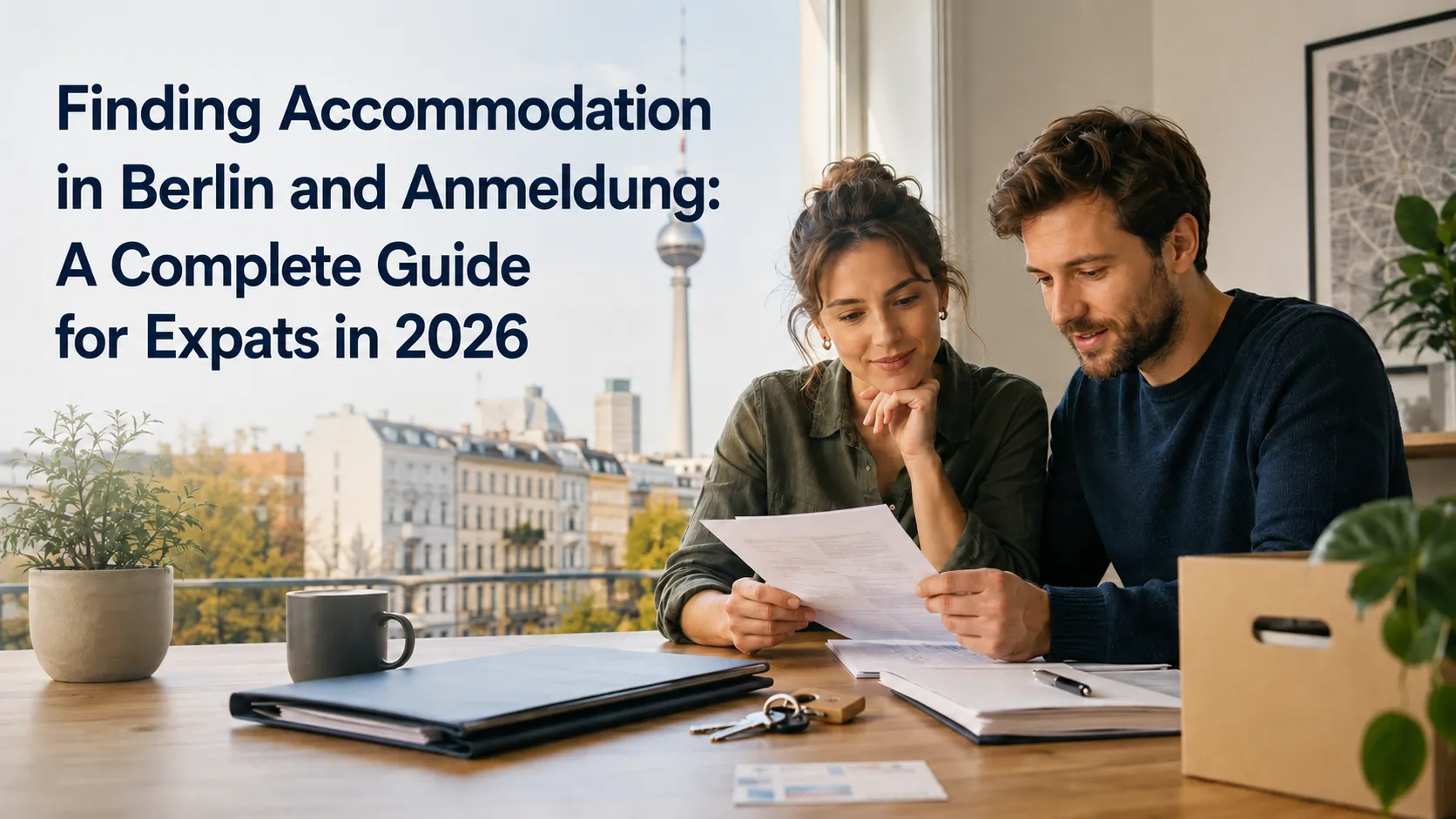
Berlin is one of Germany’s most convenient cities for starting a new life in Europe: it is home to numerous international companies, start-ups, IT jobs, English-language services, and expat communities. But this advantage has a downside: the rental market is overheated, competition is fierce, and finding an apartment without a German credit history and local documents is difficult even with a good income.
For foreign nationals, accommodation in Berlin is not merely a matter of comfort; it also provides the legal foundation for the next stages of establishing their status. Without an address, it is difficult to complete Anmeldung, open a bank account, arrange insurance, obtain a Steuer-ID, and apply for a residence permit with confidence. This article explains how renting accommodation in Berlin works in 2026, which documents landlords expect, and how Blue Card Agency supports clients from finding an apartment through residence registration and adaptation.
Berlin’s Property Market in 2026: Why Is It So Difficult?
The main reason is high demand and limited supply. IT professionals, entrepreneurs, students, freelancers, families, and employees of international companies are all moving to Berlin. Meanwhile, new housing is not being built quickly enough, and good apartments in popular neighbourhoods are taken very quickly.
Newcomers should understand the German terminology from the outset. Kaltmiete is the “cold rent”—the basic rent excluding ancillary costs. Warmmiete is the total including Nebenkosten: this usually covers some utilities and building services, but does not always include electricity, internet, and heating charged according to actual consumption. Kaution is the rental deposit. Under § 551 BGB, a cash deposit for residential accommodation may not exceed three months’ rent excluding ancillary costs.
When relocating, you therefore need to budget for more than the first month’s rent. You will usually need to pay the Kaution and first Warmmiete immediately, as well as cover temporary accommodation, furniture, internet, insurance, and document-related costs.
Where to Live: Berlin Neighbourhoods and Current Prices
Prices can vary significantly even within the same neighbourhood: the condition of the apartment, furnishings, proximity to the U-Bahn, contractual terms, and rental format—standard long-term rental or furnished apartment—all matter. According to ImmoScout24, the average Nettokaltmiete in Berlin in the second quarter of 2026 was approximately 12,72 €/m². Mitte and Charlottenburg-Wilmersdorf were considerably above the average, while Spandau and Marzahn-Hellersdorf were among the more affordable districts.
Below are indicative Warmmiete figures for a 2-room apartment. These amounts provide a rough estimate of costs, but the actual price of a particular apartment may differ.
Mitte and Prenzlauer Berg: Central and Family-Friendly Neighbourhoods
Mitte is central Berlin: offices, government institutions, restaurants, museums, and quick access to different parts of the city. Prenzlauer Berg is considered more family-friendly, with parks, schools, playgrounds, cafés, quiet streets, and good infrastructure.
The obvious downside is price and competition. Two-room apartments in these neighbourhoods are rarely inexpensive: budgets generally start at around 1 600 € Warmmiete and can reach 2 400 € or more, particularly for conveniently located, move-in-ready properties. For expats, this is a convenient but far from budget-friendly place to start.
Kreuzberg, Neukölln, and Friedrichshain: Young and Vibrant Neighbourhoods
Kreuzberg, Neukölln, and Friedrichshain appeal to people who value city life, bars, coworking spaces, the start-up scene, clubs, an international social environment, and quick access to the centre. It is easier to experience the “real Berlin” here, but harder to find quiet, affordable accommodation.
For a 2-room apartment in these neighbourhoods, a reasonable budget is 1 400–2 100 € Warmmiete. Competition can be particularly intense in popular locations, especially near Boxhagener Platz, Wrangelkiez, Graefekiez, or Schillerkiez.
Charlottenburg and Wilmersdorf: West Berlin
Charlottenburg and Wilmersdorf suit those looking for a quieter, more prestigious, and orderly side of Berlin. These areas offer plenty of older housing, good transport links, shops, schools, doctors, and a more “traditional” urban rhythm.
This is a good option for families or professionals who do not want to live in the noisiest part of the city. Prices are also high, however: a 2-room apartment often falls within the range of 1 500–2 300 € Warmmiete. The advantage is a greater sense of stability; the drawbacks are competition and landlords’ requirements.
Spandau, Marzahn, and Köpenick: Outer Districts
Spandau, Marzahn, and Köpenick often offer a compromise: the journey to the centre is longer, but there is more greenery, the atmosphere is quieter, and the chances of finding an apartment are better. Families are more likely to find suitable accommodation here, and parking, schools, and a calmer environment may be easier to secure.
The downside is the distance from the centre. If your workplace is in Mitte, Kreuzberg, or Prenzlauer Berg, the journey can take 40–70 minutes each way. On the other hand, prices are generally more manageable: a 2-room apartment may cost around 1 000–1 600 € Warmmiete, depending on its condition and nearby transport links.
What Is a Bewerbungsmappe? Preparing Documents for the Landlord
In Germany, it is often not the tenant who chooses the apartment, but the landlord who chooses a tenant from dozens of applicants. Finding accommodation therefore requires a strong Bewerbungsmappe—a document portfolio demonstrating that you are financially reliable, responsible, and a straightforward prospective tenant.
A Mappe usually includes:
— a copy of your passport and residence permit or visa;
— an employment contract stating your salary;
— your most recent payslips, if available;
— a SCHUFA-Auskunft, meaning a credit report;
— Mietschuldenfreiheitsbescheinigung
— confirmation that you have no rent arrears;
— a brief cover letter;
— confirmation of your family composition if you are relocating with a spouse or children.
The challenge for a newly arrived expat is that some of these documents may not yet exist. For example, a SCHUFA record is often empty because the person has only just arrived in Germany. In that case, it is important to strengthen the application with other evidence: an employment contract, job offer, proof of income, bank statements, a letter from the employer, or relocation support.
The cover letter also matters. It is best to explain briefly who you are, where you work, how many people will live in the apartment, whether you have pets or smoke, why you are looking for accommodation in that particular area, and why the landlord can trust you.
Anmeldung: The Newcomer’s Main Vicious Circle
Anmeldung is the registration of your residential address at the Bürgeramt. In Berlin, you must register within 14 days of moving into a new home. The official Berlin.de portal states that Anmeldung can be completed online or in person at a Bürgeramt; tenants must upload or provide confirmation from the Wohnungsgeber.
This is where the familiar vicious circle begins. To obtain a residence permit, open a standard bank account, arrange insurance, and receive a Steuer-ID, you need an address and proof of registration. But completing Anmeldung requires accommodation and a Wohnungsgeberbestätigung—confirmation from the landlord or the person providing the accommodation. To rent an apartment, however, the landlord often wants to see a bank account, SCHUFA, income, and German documents.
Important: a tenancy agreement alone does not replace the Wohnungsgeberbestätigung. Berlin.de specifically states that the confirmation from the Wohnungsgeber must include the landlord’s details, the move-in date, the apartment address, and the names of the people registering there.
It is not advisable to remain unregistered for long. This can cause problems with your bank, tax number, employer, insurance, and a subsequent visa or residence permit extension. Appointments at a Berlin Bürgeramt are also not always easy to find quickly, so it is best to start looking for a Termin as soon as you have secured accommodation.
The “Relocation and Adaptation” Package: How Blue Card Agency Helps with Accommodation
Blue Card Agency does more than simply “look for an apartment”: we structure the entire relocation process so that clients do not become stuck between accommodation, Anmeldung, banking, and public authorities.
Finding accommodation before arrival. We help identify temporary or permanent accommodation where Anmeldung is genuinely possible. This is crucial: an attractive apartment without registration may appear convenient, but it often creates problems for a foreign national establishing their legal status.
Preparing the Bewerbungsmappe. We compile and organize the document package for the landlord: passport, visa or residence permit, employment contract, proof of income, cover letter, additional financial documents, and an explanation of the newly arrived applicant’s circumstances. The objective is to present the client as a clear and dependable prospective tenant.
Communication with landlords. Our specialists help manage correspondence, clarify contractual terms, check whether Anmeldung is possible, coordinate documents, and avoid wasting time on options unsuitable for a residence permit, a family, or long-term living.
Anmeldung and the Bürgeramt. We help prepare the registration documents, check the Wohnungsgeberbestätigung, find an available Termin, and, where necessary, accompany the client to the Anmeldung appointment. Under Berlin’s official rules, registration requires a genuine address and confirmation from the Wohnungsgeber, so we work exclusively with legal arrangements.
Banking, insurance, internet, and electricity. After registration, a range of practical matters must be arranged: a bank account, health insurance, internet, electricity, mobile service, and a school or Kita for children. We help clients navigate German correspondence, contracts, and deadlines.
CTA: Order the “Relocation and Adaptation” Package
Frequently Asked Questions
Can You Buy an Anmeldung in Berlin?
No. “Buying an Anmeldung” without actually living at the address is a bad idea and a legal risk. German law prohibits providing an address for registration if the person does not actually move into the accommodation and does not intend to live there. This follows from § 19 BMG; a violation may result in fines under § 54 BMG.
If forged documents are also used, the risks become even more serious and may include problems with a residence permit. Blue Card Agency does not arrange Scheinanmeldung. We assist only with legal registration at a genuine residential address and a correct Wohnungsgeberbestätigung.
What Is a WG?
WG stands for Wohngemeinschaft—sharing an apartment with other people. Each person usually rents a separate room, while the kitchen, bathroom, and communal areas are shared.
A WG can be a good option for students, young professionals, or people relocating alone who want to save money. For families with children, EU Blue Card applicants, or long-term relocation, however, it is not always practical: questions may arise regarding space, Anmeldung, the tenancy agreement, privacy, and housing stability.
Are Internet and Electricity Included in the Warmmiete?
Usually not. Warmmiete often includes Nebenkosten—some utility costs and building services—but electricity, internet, mobile service, television, and sometimes heating may need to be arranged separately.
After moving in, tenants often need to enter into their own contracts with an internet provider and electricity supplier. In Berlin, this might be Vattenfall or another supplier. When calculating your budget, it is therefore best to add the cost of Strom, internet, mobile service, and household expenses to the Warmmiete.
Conclusion
Finding accommodation in Berlin can turn into months of rejections, viewings, and correspondence with landlords. Without a genuine address and Anmeldung, it is difficult to move forward with a residence permit, banking, insurance, and adaptation.
Submit an enquiry and Blue Card Agency will prepare a step-by-step integration plan for you in Berlin: accommodation, documents, Anmeldung, banking, insurance, and the first practical steps after your move.
Read also
-
Which Residence Permits Are Available to Ukrainians Under §24—and Which…
-
-
Paragraph 24 is ending: a step-by-step plan for switching to…
-
Mistakes when submitting visa documents and residence permit applications for…
-
-

How to arrange health insurance in Germany Health insurance in…

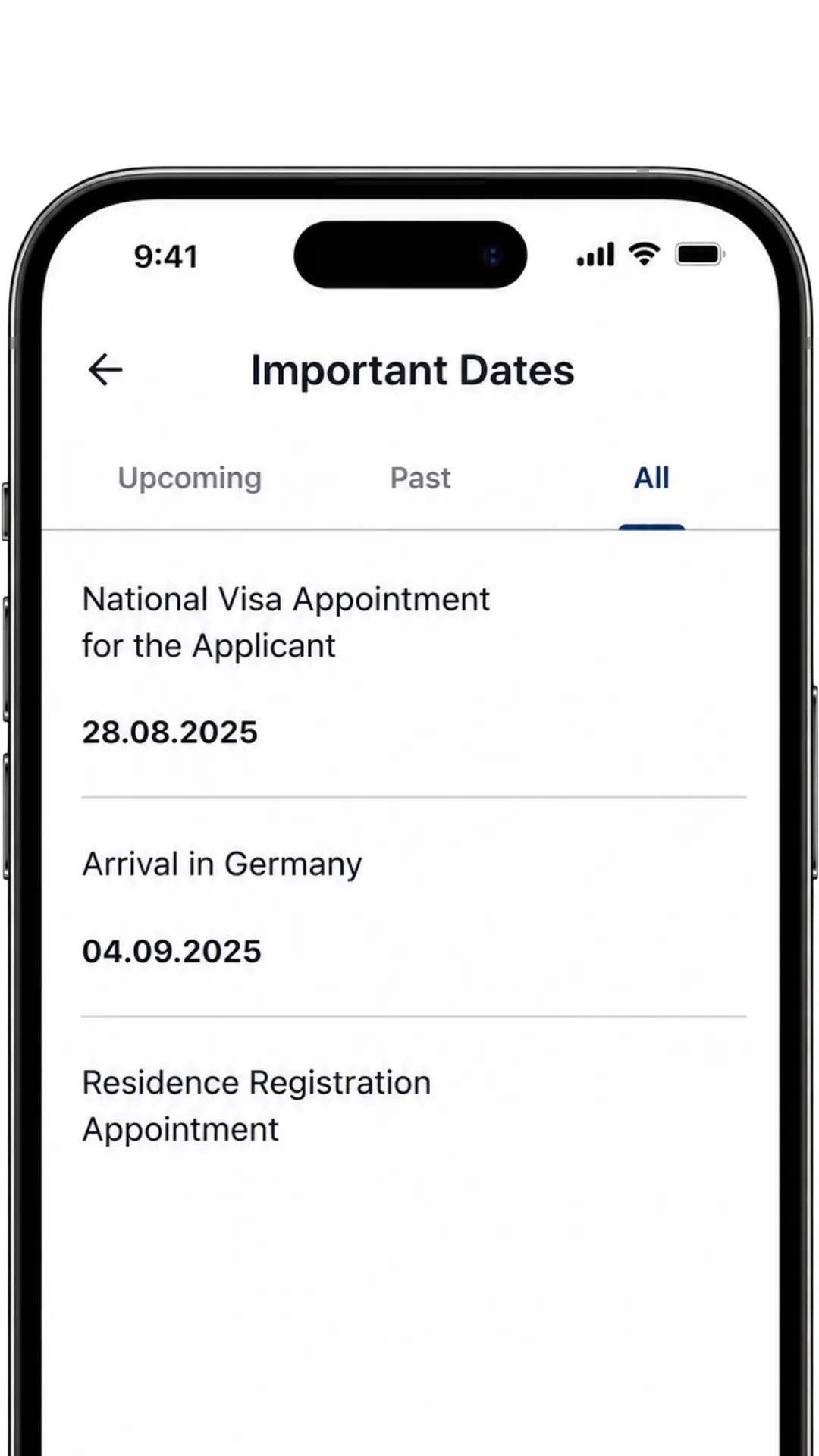
Download Our App!
Everything you need for relocating to Germany in one place: visa and document tracking, 24/7 chat with your personal manager, up-to-date adaptation tips, deadline reminders, and a personalized relocation plan — manage the entire process without calls or bureaucracy.