Leave your details and a comment
We'll contact you to arrange a convenient date and time.
EN
How to Relocate from UAE and Gulf Countries to Germany: Investment-Based Residence Permits 2026
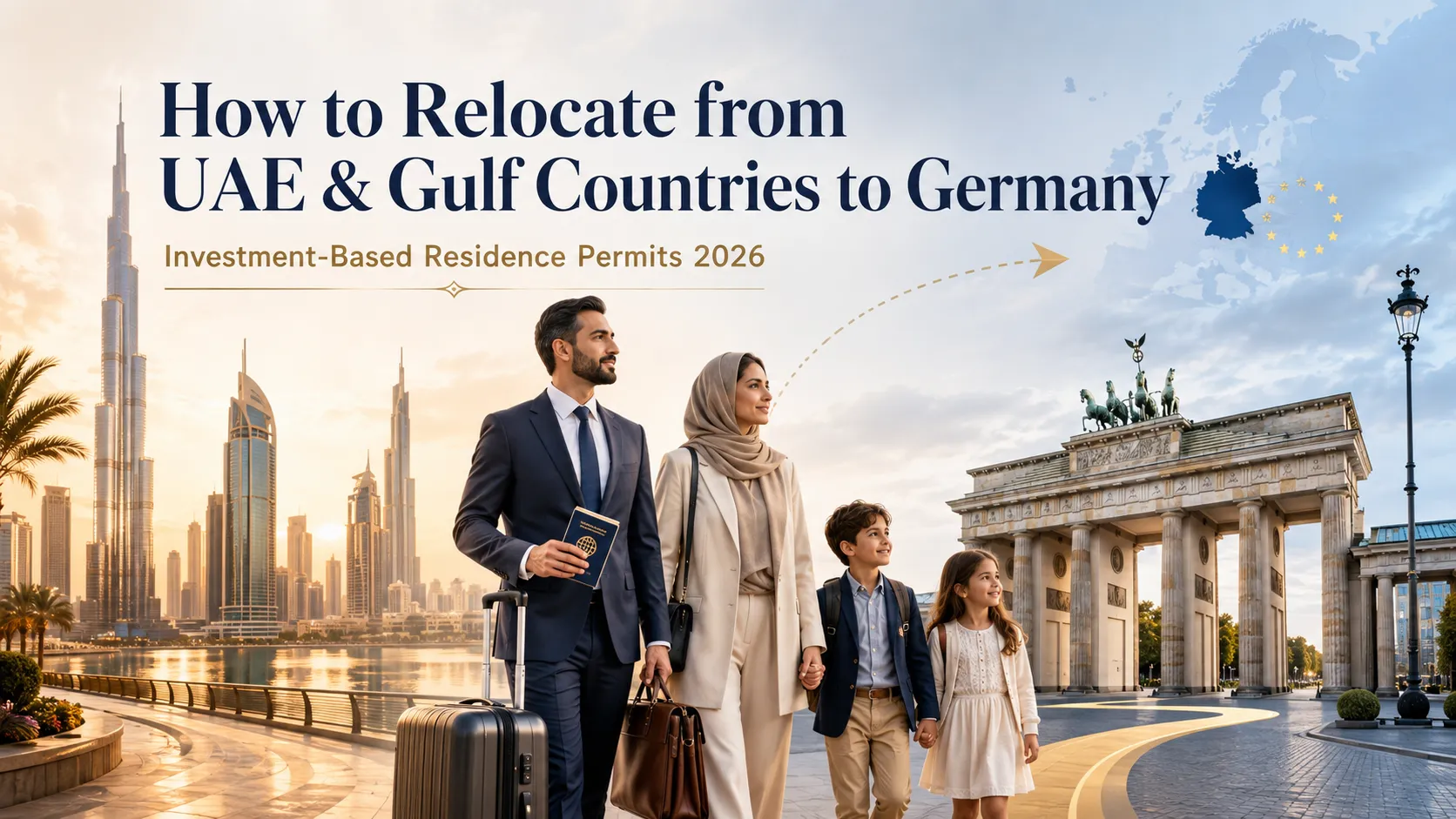
For many residents of the UAE and Gulf countries, Germany is becoming more than a business destination. It is a stable European base, a long-term family option and a serious Plan B for investors, entrepreneurs and internationally mobile families.
Germany does not offer a simple “golden visa” where a passive real estate purchase automatically leads to residence. The most relevant route for investors is usually based on real business activity, self-employment, qualified employment or family relocation. For entrepreneurs, Section 21 of the German Residence Act is often the central legal framework, because it focuses on economic interest, regional need, positive economic impact and secured financing.
This guide explains how residents of the UAE, Saudi Arabia, Qatar, Bahrain, Oman, Kuwait and other Gulf countries can approach relocation to Germany in 2026 through business immigration, investment structures, employment, family relocation and long-term residence planning.
Why Germany Is Attractive for Gulf Residents
Germany is one of the strongest economies in Europe and a practical destination for investors who want stability, access to the EU market and a predictable legal environment.
For residents of Dubai, Abu Dhabi, Riyadh, Doha, Manama, Muscat or Kuwait City, Germany offers a different type of value: not a low-tax lifestyle, but a secure European base with strong institutions, infrastructure, education, healthcare and long-term residence options.
Economic Stability
Germany gives entrepreneurs access to one of Europe’s largest consumer and business markets. It is also a strong base for companies working in technology, manufacturing, logistics, consulting, renewable energy and international trade.
Legal Predictability
For high-net-worth individuals, legal predictability matters. Germany has a structured legal system, formal contracts, transparent company registration, property rights and strong administrative procedures.
Access to the EU
A German residence permit can make European business travel and family mobility easier. It does not replace citizenship, but it can create a practical base for operating within the Schengen area.
Education and Healthcare
Germany offers public education, private schools, international schools and a highly developed healthcare system. For families relocating from the Gulf, this is often one of the strongest reasons to consider Germany.
Business Opportunities
Germany can be useful for opening an EU office, managing European assets, building a startup, investing in an operating company or expanding an existing Gulf business into the European market.
Long-Term Residence Planning
Germany offers a clear path from temporary residence to permanent residence and, later, naturalisation if the legal requirements are met. General naturalisation is usually possible after five years of lawful residence, and Germany generally allows multiple citizenship under the 2024 citizenship reform.
Germany Is Not a Passive Golden Visa Country
Germany should not be presented as a passive residence-by-investment country. A property purchase alone is usually not enough for residence.
No Automatic Residence Through Property
Buying an apartment, villa or commercial unit in Germany does not automatically create a residence right. The authorities look at the actual residence basis: business activity, employment, self-employment, family reunification or another legal route.
Active Business Substance Matters
For investors, a stronger route usually involves an active business: company formation, business plan, financing, commercial activity, market logic and potential economic contribution.
Individual Structure Is Essential
A Dubai real estate investor, a Saudi consultant, a Qatari founder and a family office owner may all need different structures. The right path depends on business goals, tax exposure, family situation, financing and long-term plans.
Main German Residence Pathways for Investors
There is no single “investor visa Germany” that works automatically for everyone. The right pathway depends on the client’s profile, capital, family, business plan and long-term goals.
| Pathway | Best For | Key Requirement | Notes |
| Business immigration under §21 AufenthG | Entrepreneurs, investors, business owners | Viable business activity in Germany | Main route for active investors |
| Freelance / self-employment | Consultants, IT experts, advisors | Clients, income and professional activity | Not a passive investment route |
| EU Blue Card | Highly qualified employees or executives | Job offer and salary threshold | Useful for senior specialists |
| Standard work residence permit | Qualified employees | Job offer and qualification | Can work for non-Blue Card roles |
| Family reunification | Spouse and children | Main applicant’s status, housing, insurance | Often part of a family strategy |
| Study route | Children or younger family members | Admission and financial proof | Less common for the main investor |
| Real estate + business | Property investors | Active management or business model | Property alone is usually not enough |
Business Immigration Under §21 AufenthG
For investors and entrepreneurs, business immigration under Section 21 of the Residence Act is usually the most relevant route. It is designed for self-employed activity in Germany.
German authorities do not only look at how much money someone invests. They consider whether there is an economic interest or regional need, whether the activity is expected to have positive economic effects and whether financing is secured.
Who This Route Can Suit
This route may suit business owners, founders, investors, consultants, family office clients and entrepreneurs who want to operate a real business in Germany.
It may also be relevant for investors who want to expand an existing Gulf company into Europe or create a German structure for an international business.
Investment Amount
There is no universal legal minimum investment that guarantees residence. A practical planning budget may range from €50,000 to €250,000 or more, depending on the business model, but the real focus is the strength of the business case.
A small consulting business, a real estate management company and a manufacturing project will all require different budgets.
Business Plan
The business plan should explain the business model, market, clients, financing, revenue forecast, hiring plan and economic relevance for Germany.
A weak or generic business plan is one of the most common risks in investor relocation cases.
Economic Benefit
The project should demonstrate substance. This may include job creation, local contracts, tax contribution, innovation, technology transfer, export potential or regional economic value.
Permanent Residence
For self-employed entrepreneurs under Section 21, permanent residence may be possible after three years if the business has been successfully implemented, shows sustainable development and the livelihood of the applicant and family is secured.
Real Estate Investment in Germany
Real estate can be part of a German relocation strategy, but it should not be confused with a standalone visa route.
Residential Property
Buying residential property can support family relocation and long-term wealth planning. It can also help with housing stability, but it does not replace the need for a valid residence basis.
Commercial Property
Commercial property may be more relevant if it is connected to an operating business. For example, an investor may create a German company to manage commercial units, serviced apartments or leasing operations.
Property Management Company
A real estate strategy is stronger when it includes active management, contracts, rental income, service providers, staff or a clear commercial structure.
Freelance and Consulting Route
Some Gulf residents do not need to create a large company. They may be able to build a self-employed or freelance route around their professional expertise.
Suitable Profiles
This route may suit IT consultants, management advisors, engineers, designers, media professionals, coaches, business development experts and other independent specialists.
Client Base
The applicant should usually show a realistic client base, income plan, portfolio, contracts or letters of interest. A freelance route without clients or market proof is usually weak.
Professional Positioning
For consultants from Dubai, Riyadh, Doha or Abu Dhabi, the strongest cases often combine international experience, niche expertise and a clear German or European market connection.
Blue Card and Employment Routes
Some investors or business owners may have a stronger route through employment, especially if they will work as executives or senior specialists in a German company.
EU Blue Card
The EU Blue Card is a residence title for qualified employment. In 2026, the regular salary threshold is €50,700 gross per year. A lower threshold of €45,934.20 applies to shortage occupations, young professionals and some special categories.
Standard Work Residence Permit
If the Blue Card requirements are not met, a standard work residence permit may still be possible for qualified employment. This can apply to executives, technical specialists, operational staff or family members who later find work in Germany.
Employment for Founders
In some cases, a founder may work through a German company structure. This requires careful coordination between corporate, immigration, tax and employment matters.
Family Relocation
For investors from the Gulf region, family relocation is often just as important as the main residence route.
Spouse and Children
A spouse and minor children may be able to relocate with the main applicant if the relevant requirements are met. The process usually involves marriage documents, birth certificates, housing, health insurance and financial support.
Work Rights for Spouses
In many cases, a spouse may receive access to the labour market after relocation. The exact situation depends on the main applicant’s residence title and the family member’s own permit.
Schools and Universities
Germany offers public schools, private schools and international schools. In major cities, families can find British, American, bilingual and IB programs.
Healthcare
Health insurance is a central part of relocation. The right insurance model depends on employment, self-employment, income, family members and residence status.
Investment Budget and Cost Breakdown
A serious Germany relocation plan should include not only visa costs, but also business setup, tax advice, housing, insurance, translations and family expenses.
| Cost Category | Planning Range | Notes |
| Initial business investment | €50,000–€250,000+ | Depends on business model |
| Legal, tax and advisory partners | €10,000–€30,000+ | Higher for complex structures |
| Company formation and setup | €5,000–€15,000 | GmbH, notary, registrations, bank setup |
| First-year living costs | €30,000–€50,000+ | Depends on city and family size |
| Real estate purchase | €500,000–€2M+ | Optional, not a direct visa route |
| Translations and certification | €1,000–€3,000 | Depends on documents |
| Health insurance | €300–€800+ per month | Depends on family and insurance model |
| Business maintenance | €3,000–€8,000+ per year | Accounting, filings, administration |
Liquid Capital
For a smooth process, many investors should plan for sufficient liquid capital, not only asset value on paper. Authorities and service providers usually need clear, verifiable financial documentation.
Business Operating Costs
A German company may require accounting, tax filings, insurance, office costs, payroll, professional services and compliance management.
Family Costs
International schools, private insurance, temporary housing and relocation logistics can significantly increase the first-year budget.
Timeline and Process
A realistic timeline depends on the applicant’s nationality, country of residence, business model, embassy availability, documents and the German city involved.
| Stage | Timeline | What Happens |
| Strategy and document review | Month 1 | Goals, route, family and document overview |
| Business planning | Months 1–2 | Business plan, financial model, market logic |
| Company and investment preparation | Months 2–3 | Structure, funding, partner coordination |
| Visa preparation | Months 3–4 | Forms, translations, supporting documents |
| Embassy and authority review | Months 4–7 | Embassy, Ausländerbehörde, possible chamber review |
| Visa approval and relocation | Months 7–8 | Entry visa, travel, housing |
| Arrival and local steps | Months 8–9 | Anmeldung, insurance, residence card |
| Business operation | Years 1–3 | Implementation, reporting, renewals |
| Permanent residence planning | Year 3+ | Possible settlement permit if conditions are met |
Month 1: Route and Document Review
The first step is to understand the applicant’s goals, business background, family situation, tax exposure, capital and preferred timeline.
Months 1–3: Business and Structure
If the business route is selected, the business plan, financial model, company structure and partner coordination should start early.
Months 4–8: Application and Relocation
The visa process may involve the embassy, German local authorities and sometimes economic or chamber review. For many business cases, a 4–8 month planning horizon is more realistic than expecting a quick decision.
Germany vs Other European Residence Options
Germany is not the easiest passive investment destination in Europe, but it is one of the strongest countries for real business, family life and long-term economic stability.
| Country | Passive Real Estate Route | Typical Logic | Key Advantage | Key Limitation |
| Germany | No direct golden visa | Business, employment, self-employment | Largest EU economy, strong business base | Requires real substance |
| Portugal | Real estate route ended | Funds, donations, jobs | Flexible residence planning | Property no longer qualifies |
| Spain | Golden Visa ended in 2025 | Other residence routes needed | Lifestyle and market access | Real estate visa route closed |
| Greece | Real estate route available | Property investment | Lower entry options in some cases | Smaller economy |
| Malta | Investment-based programs | Contribution and residence structures | English-speaking environment | Smaller domestic market |
Portugal no longer allows real estate investment as a Golden Visa route, and Spain ended its Golden Visa program in April 2025. Greece still has real estate-based Golden Visa options, depending on the property type, location and legal conditions.
Germany’s Advantage
Germany is better understood as a business relocation jurisdiction, not a passive investment migration product.
When Germany Is Not Ideal
Germany may not be the best fit for clients looking only for low taxes, minimal administration or residence through passive property ownership.
Tax Considerations for Gulf Residents
Tax planning is one of the most important topics for UAE and Gulf residents moving to Germany.
Tax Residency
A person may become German tax resident depending on physical presence, home, family location and centre of life. This may affect worldwide income, foreign companies, dividends, capital gains and real estate income.
Income Tax
Germany has progressive personal income tax rates. The entry tax rate is 14%, and the highest rate is 45%.
Corporate and Trade Tax
Corporate taxation may include corporate income tax, solidarity surcharge and trade tax. The final burden depends partly on the municipality.
Inheritance and Gift Tax
Germany has inheritance and gift tax rules, so family offices and cross-border families should review succession planning before moving.
Lifestyle and Cultural Adaptation
Relocating from the Gulf to Germany is not only an immigration process. It is also a lifestyle, climate and culture change.
Climate
Germany has four seasons, colder winters and less year-round sunshine than the Gulf. Families from Dubai, Abu Dhabi or Doha should prepare for a different rhythm of life.
Language
English is widely used in international business and tech environments. German becomes important for authorities, schools, healthcare, neighbours, daily life and long-term integration.
Bureaucracy
German bureaucracy can feel slow and formal, but it is usually predictable when documents are prepared correctly. Written communication, appointments, deadlines and contracts matter.
Muslim and Arab Communities
Large German cities have Muslim communities, Arab and Turkish networks, halal restaurants, mosques and international cultural associations.
Required Documents
The exact document list depends on the route, country of residence, family situation and business model.
Personal Documents
Applicants usually need passports, civil status documents, birth certificates, marriage certificates, proof of residence, photos and application forms.
Business Documents
Business applicants may need a business plan, financial forecast, proof of capital, company documents, contracts, market research and evidence of entrepreneurial experience.
Family Documents
Families usually need marriage certificates, birth certificates for children, insurance documents, housing proof and translated or certified documents where required.
How Blue Card Agency Supports Gulf Clients
Blue Card Agency provides organisational support for clients relocating from the UAE and Gulf countries to Germany. We help structure the process, prepare documents, coordinate stages and involve specialised legal, tax, accounting and business partners where needed.
Introductory Relocation Meeting
We start with a private online meeting to understand your goals, family situation, business background, budget, timeline and preferred route to Germany.
Document Coordination
We help organise document collection, translations, certifications and structured application packages.
Business Planning Coordination
For entrepreneur routes, we coordinate the preparation of business plans, market research, financial projections and supporting materials together with relevant partners.
Company Setup Support
Where company formation is part of the plan, we coordinate with notaries, accountants, tax advisors and business consultants.
Family and Arrival Support
We can support housing search, Anmeldung preparation, school search, insurance steps, bank account setup and first administrative tasks after arrival.
Why Professional Organisational Support Matters
German relocation for investors is rarely a one-document process. It usually involves immigration, business planning, tax, family matters, housing and local administration.
Professional organisational support helps avoid weak business plans, missing translations, wrong route assumptions, unrealistic timelines, tax surprises, housing delays and family relocation problems.
Blue Card Agency does not promise approvals or special access to authorities. We help clients prepare seriously, organise the process and involve qualified partners for legal, tax and business matters.
FAQ
Can I Get German Residence by Buying Real Estate?
Usually, no. Germany does not offer a simple real-estate golden visa. Real estate can support a broader business or family plan, but it is usually not enough on its own.
What Is the Minimum Investment for Germany?
There is no universal statutory minimum investment for every entrepreneur case. The amount depends on the business model, financing, economic benefit and overall application.
Can I Keep My Business in the UAE or Gulf?
In many cases, yes. Germany does not require you to close your Gulf business, but tax residency and worldwide income issues should be reviewed before relocation.
Can I Bring My Family?
Yes, family relocation is often possible if the requirements are met. The process usually involves documents for spouse, children, housing, insurance and financial support.
How Long Does the Process Take?
Many investor and business relocation cases take several months. A realistic planning horizon is often 4–8 months, depending on the embassy, German city, business plan and documents.
Do I Need German Language Skills?
For the initial route, language requirements depend on the case. For long-term integration, permanent residence and citizenship, German becomes much more important.
Can I Get Permanent Residence?
For self-employed entrepreneurs under Section 21, permanent residence may be possible after three years if the business is successful, sustainable and the family’s livelihood is secured.
Is Dual Citizenship Allowed in Germany?
Germany generally allows multiple citizenship under the 2024 reform, and regular naturalisation is usually possible after five years if the conditions are met.
Do I Need Tax Advice Before Moving?
Yes. Gulf residents should review tax residency, worldwide income, company structures, dividends, real estate, inheritance and family office planning with an international tax advisor before relocating.
Legal Disclaimer
This article is for general information only. It is not legal, tax, financial or investment advice. German immigration rules, tax rules and administrative practice may change, and every case depends on the applicant’s documents, background, business model, financing, family situation and compliance with objective legal criteria.
Blue Card Agency provides organisational relocation support and document coordination. For individual legal, tax, accounting or investment matters, we connect clients with qualified professional partners. No approval, residence permit, permanent residence or citizenship outcome can be guaranteed.
Start Your Germany Relocation Plan
Germany can be a serious European Plan B for residents of the UAE and Gulf countries who want stability, business access, family security and a long-term path in Europe.
Whether you are an investor, entrepreneur, business owner, consultant or family office client, the best strategy starts with a structured review of your goals, documents, budget, tax exposure and family needs.
Schedule a confidential meeting with Blue Card Agency to discuss your relocation from the UAE or Gulf region to Germany and receive a tailored organisational roadmap for your next steps.
Read also
-
Which Residence Permits Are Available to Ukrainians Under §24—and Which…
-
-
Finding Accommodation in Berlin and Anmeldung: A Complete Guide for…
-
Paragraph 24 is ending: a step-by-step plan for switching to…
-
Mistakes when submitting visa documents and residence permit applications for…
-

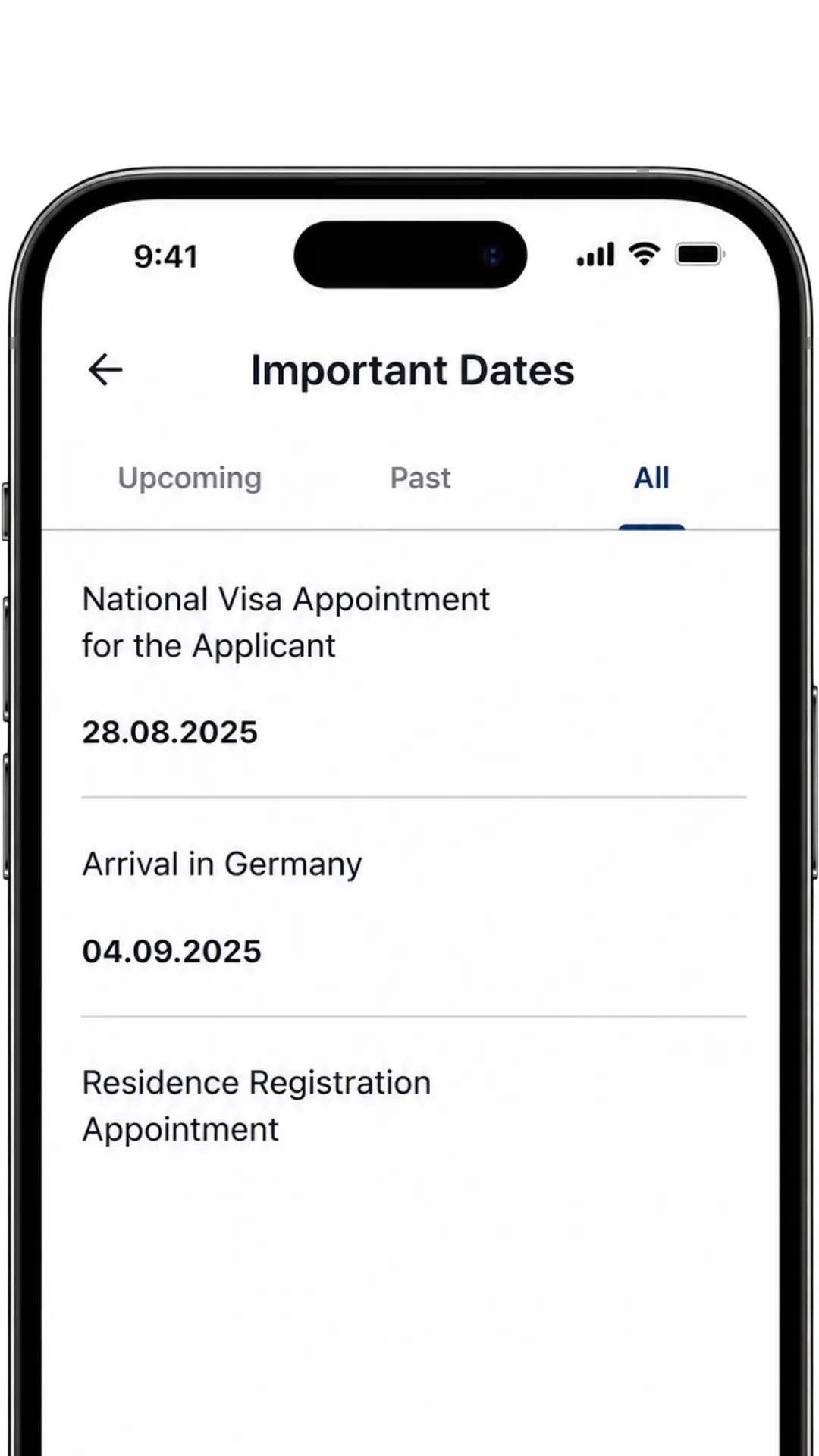
Download Our App!
Everything you need for relocating to Germany in one place: visa and document tracking, 24/7 chat with your personal manager, up-to-date adaptation tips, deadline reminders, and a personalized relocation plan — manage the entire process without calls or bureaucracy.