Leave your details and a comment
We'll contact you to arrange a convenient date and time.

EN
Salaries in Germany 2026:
an overview of the labor market
Salaries in Germany in 2026 remain one of the key topics for those who are planning to relocate or career development in Europe. Despite moderate economic growth, the labor market remains resilient, and salary growth in Germany in 2026 continues across a number of sectors, especially IT, healthcare, and engineering.
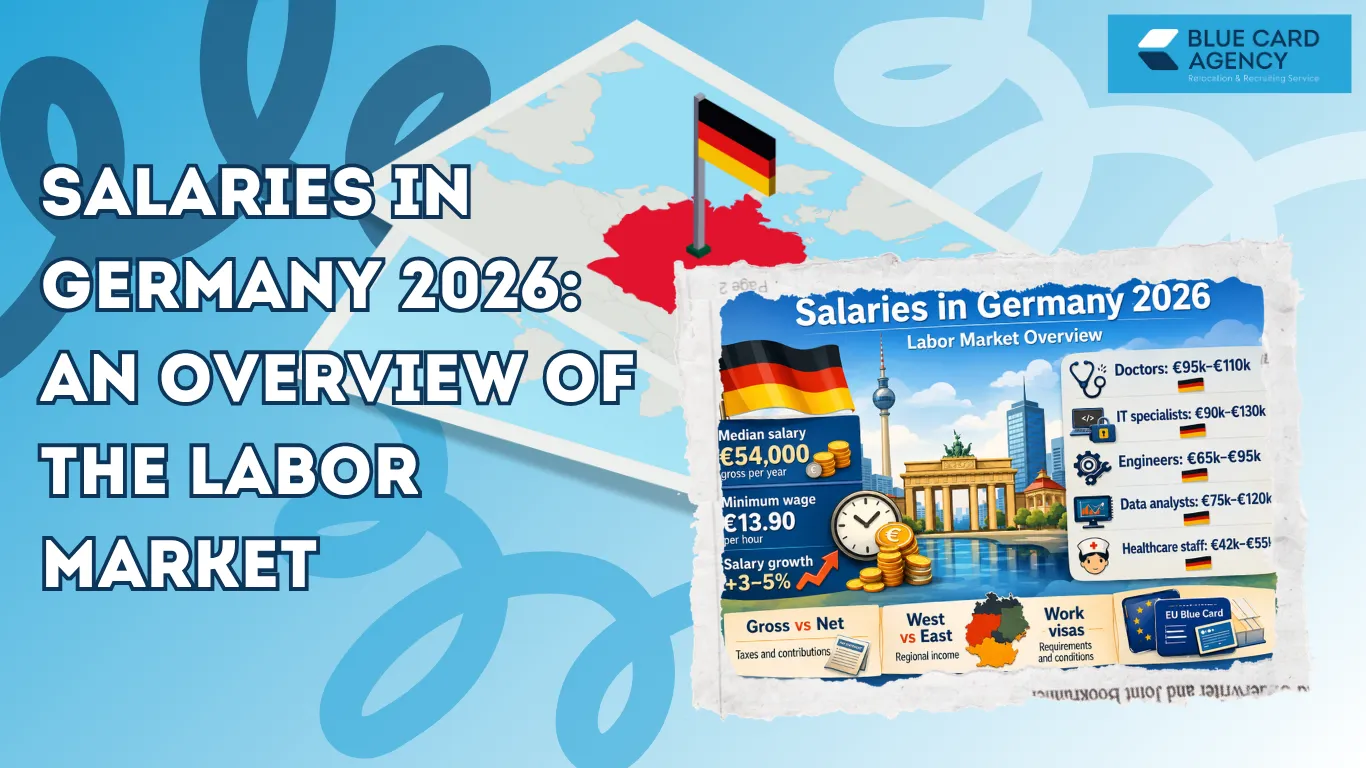
The median salary in Germany in 2026 is around 54,000 euros gross per year. This is before taxes and social security contributions. It reflects the midpoint of the market: half of employees earn more and half earn less. However, final income depends significantly on the region, profession, and tax system.
Salary trends in Germany and salary indexation
Salary trends in Germany in 2026 is shaped by inflation, collective agreements, and sector-level arrangements. In many sectors in Germany, regular salary indexation is carried out, especially in companies operating under collective wage agreements (Tarifvertrag).
The minimum hourly wage from January 2026 is 13.90 euros gross. This affects the entire market, as lower pay levels are adjusted. As a result, incomes in low- and mid-paid segments are gradually becoming more balanced.
Real salary in Germany (adjusted for inflation) is what matters when assessing income. Nominal income growth in 2026 partially offsets the inflationary pressure of previous years, which has a positive effect on household income.
Gross and net salary in Germany: how much you take home
Gross and net salary in Germany understanding the difference between them is critical when planning a move. Gross is the amount before taxes. Net is the actual income after income tax, pension, health, and social insurance contributions are deducted.
For example, with an annual income of 60,000 euros gross, an employee without children in tax class I may receive around 3,000–3,300 euros net per month. The exact amount depends on tax class, federal state of residence, and family status.
That is why, when evaluating offers, it is important to calculate not only the nominal rate, but also the purchasing power of a salary in Germany. In southern regions, income is higher, but housing costs are also significantly greater.
Salary in Germany in 2026 by region
The regional factor still plays a key role. The highest figures are recorded in Bavaria, Baden-Württemberg, and Hesse. In major economic centers, the average annual salary exceeds 60,000 euros gross.
In the eastern federal states, income levels are on average 10–15% lower, but rent and the cost of living are more affordable.
Therefore, when assessing the purchasing power of a salary in Germany it is important to consider the balance between income and expenses, not just absolute figures.
Salary growth in Germany in 2026 by profession
Salary growth in Germany in 2026 is most noticeable in fields facing labor shortages. The highest-earning groups include:
- doctors and specialized medical professionals — from 95,000–110,000 euros per year;
- IT architects and cybersecurity specialists — 90,000–130,000 euros;
- mechanical and automotive engineers — 65,000–95,000 euros;
- data analysts and AI specialists — 75,000–120,000 euros;
- qualified healthcare staff — 42,000–55,000 euros.
In 2026, demand remains high for specialists with confirmed qualifications and 3–5 years of work experience. German language skills at B2–C1 level directly affect the size of the offer, especially in regulated professions.
Gross and net salary in Germany: how much you take home
Gross and net salary in Germany — understanding the difference between them is critical when planning a move. Gross is the amount before taxes. Net is the actual income after income tax, pension, health, and social insurance contributions are deducted.
For example, with an annual income of 60,000 euros gross, an employee without children in tax class I may receive around 3,000–3,300 euros net per month. The exact amount depends on tax class, federal state of residence, and family status.
That is why, when evaluating offers, it is important to calculate not only the nominal rate, but also the purchasing power of a salary in Germany. In southern regions, income is higher, but housing costs are also significantly greater.
Salary in Germany in 2026 by region
The regional factor still plays a key role. The highest figures are recorded in Bavaria, Baden-Württemberg, and Hesse. In major economic centers, the average annual salary exceeds 60,000 euros gross.
In the eastern federal states, income levels are on average 10–15% lower, but rent and the cost of living are more affordable.
Therefore, when assessing the purchasing power of a salary in Germany it is important to consider the balance between income and expenses, not just absolute figures.
Salary growth in Germany in 2026 by profession
Salary growth in Germany in 2026 is most noticeable in fields facing labor shortages. The highest-earning groups include:
- doctors and specialized medical professionals — from 95,000–110,000 euros per year;
- IT architects and cybersecurity specialists — 90,000–130,000 euros;
- mechanical and automotive engineers — 65,000–95,000 euros;
- data analysts and AI specialists — 75,000–120,000 euros;
- qualified healthcare staff — 42,000–55,000 euros.
In 2026, demand remains high for specialists with confirmed qualifications and 3–5 years of work experience. German language skills at B2–C1 level directly affect the size of the offer, especially in regulated professions.
Salary forecast in Germany for 2026 and prospects for foreigners
The salary forecast for Germany in 2026 points to moderate but stable growth of 3–5% in high-demand industries. No major jumps are expected, but structural labor shortages continue to support the labor market.
For foreign specialists, it is important to consider the minimum income thresholds for obtaining work visas and the EU Blue Card. Meeting salary requirements is a mandatory condition for legal employment.
When planning relocation, you need to analyze:
- whether your diploma and qualifications meet German standards;
- minimum salary requirements for the selected visa category;
- net income calculation;
- regional labor market specifics.
Real salary in Germany and a strategic approach
Salaries in Germany in 2026 show resilience and gradual adaptation to economic conditions. With an average level of around 54,000 euros gross, actual income can vary significantly depending on industry and region.
The key factor is not only the nominal rate, but also real salary (adjusted for inflation), as well as the purchasing power of a salary in Germany. A strategic choice of profession, region, and employment format allows you to build a stable financial model and integrate successfully into the German labor market.
Real salary in Germany and a strategic approach
To navigate income requirements, understand the difference between gross and net, and choose the right visa strategy, it is important to assess your specific situation — taking into account your profession, region, and goals.
If you want to understand what salary in Germany in 2026 you can realistically expect and which immigration path will be best for you — book a consultation.
We will review your situation personally, calculate your prospects, and build a clear action plan.
Read also
-
-

Paragraph 24 is ending: a step-by-step plan for switching to…
-

Mistakes when submitting visa documents and residence permit applications for…
-
-
-

Step-by-step planMoving to Germany for foreigners Moving to Germany is…




Download Our App!
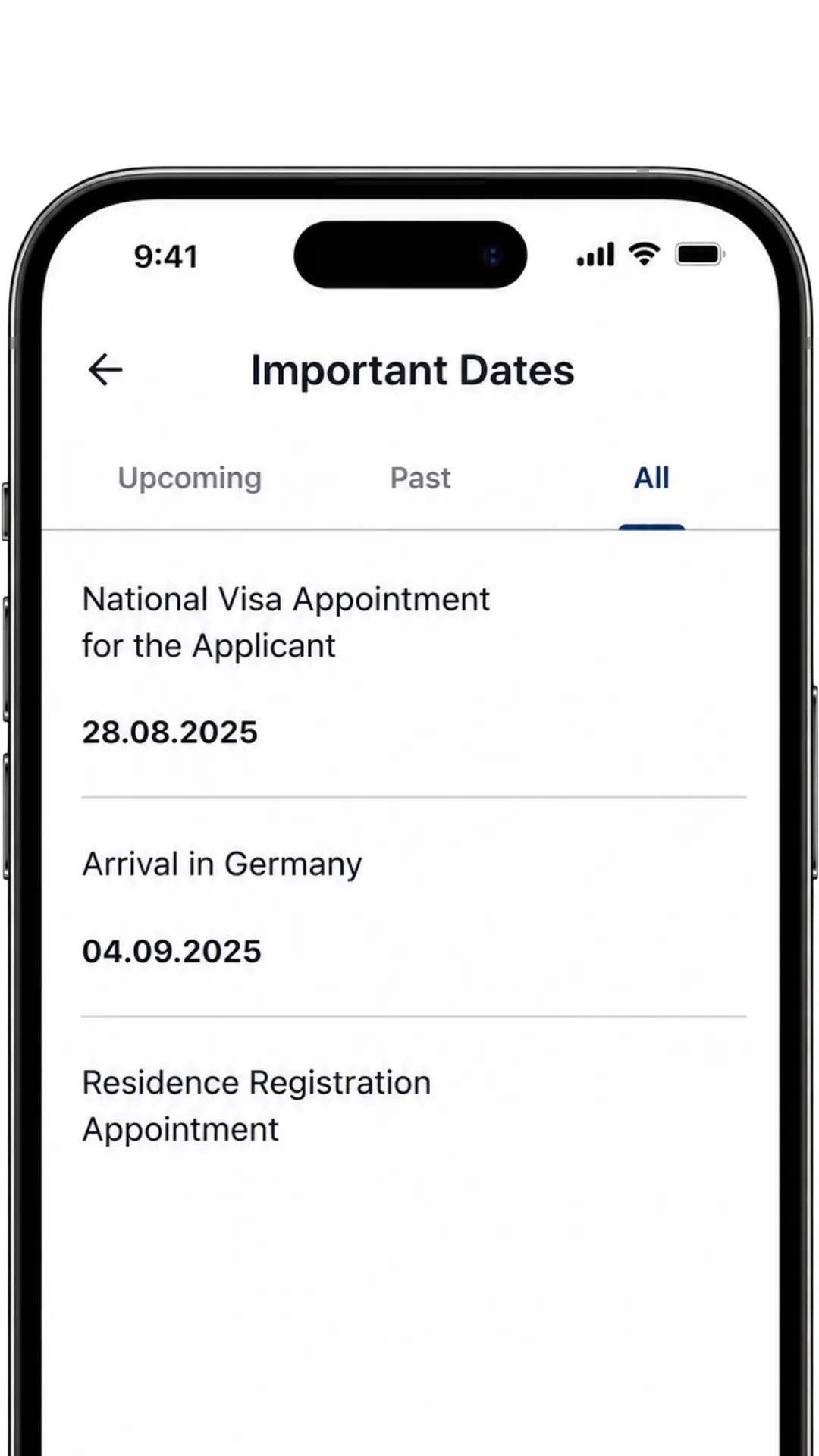
Everything you need for relocating to Germany in one place: visa and document tracking, 24/7 chat with your personal manager, up-to-date adaptation tips, deadline reminders, and a personalized relocation plan — manage the entire process without calls or bureaucracy.