Leave your details and a comment
We'll contact you to arrange a convenient date and time.
EN
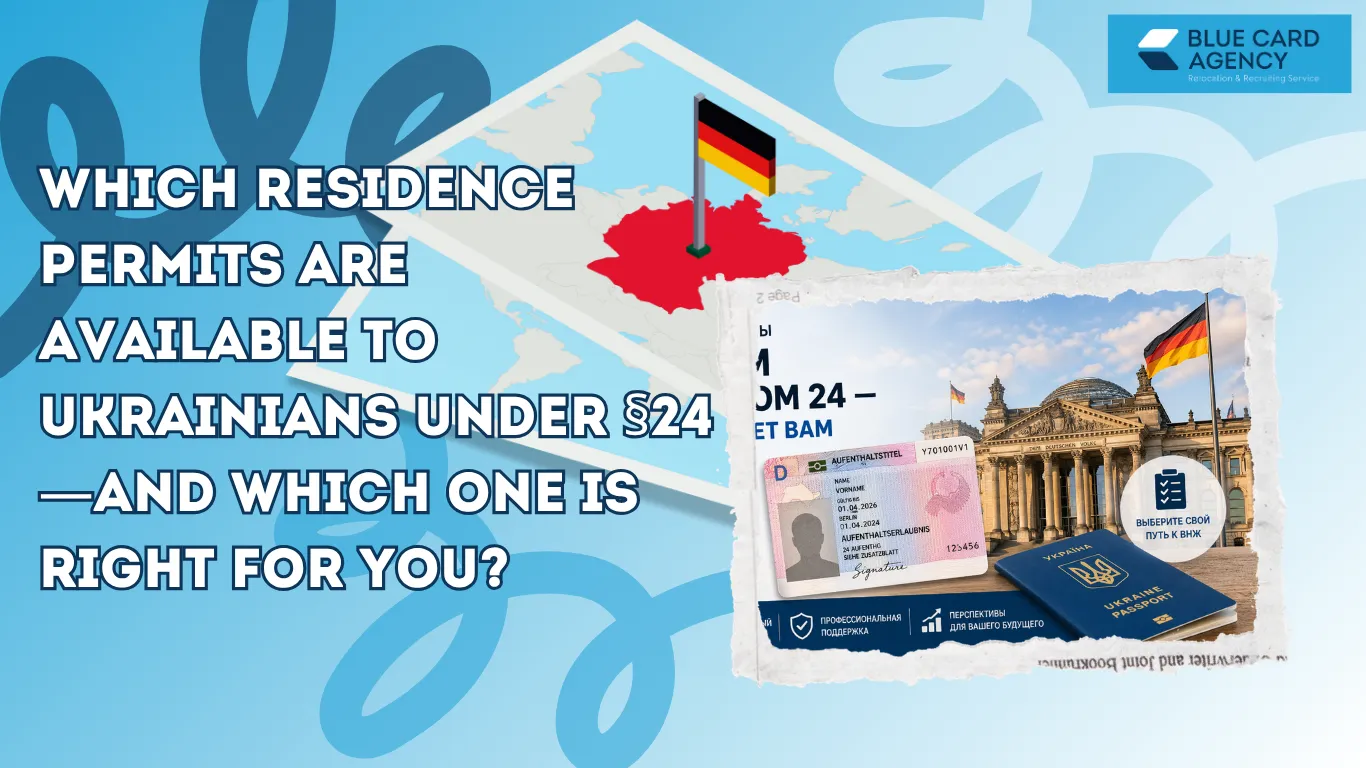
Which Residence Permits Are Available to Ukrainians Under §24—and Which One Is Right for You?
Many people living in Germany under §24 AufenthG eventually ask which German residence permits Ukrainians can obtain after temporary protection and which section they can switch to from §24.
Germany’s immigration law is fairly complex: there are many types of Aufenthaltserlaubnis, each suited to different circumstances. Without experience in this field, it can be difficult to understand which German residence permit to choose, what requirements must be met, and what prospects each status offers.
This article is intended for anyone who wants to understand which residence permit options are available to Ukrainians after temporary protection and how to choose the best path.
Here you will find:
- an overview of all the main types of residence permits in Germany
- a comparison of requirements and prospects
- an understanding of which residence permit after §24 may be right for you.
Important: this article is for informational purposes. An individual consultation is recommended when choosing a specific path.
How the German Residence Permit System Works: A Brief Introduction
What Is an Aufenthaltserlaubnis, and How Does It Differ from a Niederlassungserlaubnis?
German law provides for various categories of residence permits.
Aufenthaltserlaubnis is a temporary residence permit issued for a specific period and tied to a particular purpose: employment, education, business, or family.
Niederlassungserlaubnis is a permanent residence permit. It is usually the next stage in the immigration process. Many residence permit categories offer a route to a Niederlassungserlaubnis and the opportunity to remain in Germany long-term after several years of residence.
Why §24 Is a “Special Case”
Temporary protection status under §24 AufenthG differs from standard immigration programs. It was introduced under the European “temporary protection in Germany” mechanism for Ukrainians.
This status allows people to live and work in the country, but it is not considered a conventional immigration residence permit.
This naturally raises the question: which residence permit after §24 should you choose?
The Selection Principle: From Your Circumstances to the Appropriate Section
The choice of residence permit depends on several factors:
- education
- professional experience
- language proficiency
- family status
- financial resources.
These factors determine which section you can switch to from §24.
Category 1. Employment-Based Residence Permits—for Those Already Working or Looking for Work
§18a—Residence Permit for Skilled Workers with Vocational Qualifications
Section §18a residence permit in Germany is intended for people with vocational qualifications.
Requirements
- recognition of the qualification / diploma
- an employment contract, as the main criterion for obtaining a residence permit
- proof of qualifications.
Who It Is For
This type of residence permit is suitable for skilled professionals in vocational occupations, including technicians, tradespeople, and healthcare staff.
Advantages and Disadvantages
Advantage—a stable route to long-term residence.
Disadvantage—the need to complete recognition of your qualification / diploma in Germany.
§18b—for Skilled Workers with Higher Education Qualifications
Section §18b is intended for people with a university degree—in other words, those with the higher education qualification required for this type of residence permit.
Requirements
- a higher education diploma
- recognition of the diploma in Germany or confirmation that it is comparable to a German qualification
- a job offer or employment contract in the relevant professional field
- the status of a Fachkraft (qualified professional).
In other words, §18b is intended for qualified professionals (Fachkräfte) with higher education qualifications who have received a job offer in Germany.
Who It Is For
This option is often chosen by professionals in IT, engineering, and economics.
Advantages and Disadvantages
Advantage—good prospects for career development and long-term residence in Germany.
Disadvantage—the diploma must be recognized in Germany or confirmed as comparable to a German qualification.
§18g—EU Blue Card
The EU Blue Card is a special type of employment-based residence permit that Ukrainians may obtain if they have the required education and a job offer in one of the following fields:
- IT and programming
- engineering
- medicine
- natural sciences
- mathematics and analytics
- economics and finance
The minimum salary requirements may be lower in certain occupations experiencing staff shortages in Germany. These include IT specialists, engineers, mathematicians, and doctors, for example.
Advantages
The main advantage of the EU Blue Card is an accelerated route to a Niederlassungserlaubnis (permanent residence permit).
EU Blue Card holders may obtain permanent residence:
- after 21 months with German at level B1,
- after 33 months with basic language proficiency at level A1.
§19c—Residence Permit for Employment Without Qualification Requirements
In some cases, a §19c residence permit may be available without formal qualifications. Section §19c AufenthG provides a route to an employment-based residence permit in Germany in certain circumstances where a person does not meet the conventional requirements for Fachkraft status—meaning they do not have a recognized diploma or vocational qualification. This type of permit is used less frequently and applies where the German labour market needs employees but standard immigration programs are not suitable.
When It Applies
A residence permit under §19c may be issued if:
- an employer offers official employment in Germany
- there is demand for the position in the labour market
- approval has been obtained from the Bundesagentur für Arbeit (Federal Employment Agency)
- the employment conditions and salary meet German standards
In some cases, this section is used for specific labour migration programs or occupations in which employers face staff shortages.
Limitations
This type of residence permit has several limitations:
- each case is decided individually
- proof is required that candidates for the position are difficult to find in Germany or the EU
- the permit is usually tied to a specific employer
An application under §19c can therefore be more complex and less predictable than an application for a qualified professional.
Who It Is For
This option may be suitable for people:
- without a recognized diploma
- without a vocational qualification recognized in Germany
- with practical professional experience in a particular field
In some cases, this residence permit is issued to workers in the service sector, logistics, agriculture, or other industries with an ongoing need for staff.
Category 2. Residence Permits for Education—for Those Who Want to Study or Train in Germany
§16a—Ausbildung (Vocational Training)
Section §16a allows Ukrainians to obtain a residence permit for vocational training (Ausbildung) in Germany. It is a popular way to begin a career in the country and later switch to a full employment-based residence permit.
What Is Ausbildung?
Ausbildung is Germany’s dual vocational education system. Training takes place in two formats simultaneously:
- practical work at a company, where the trainee acquires hands-on skills
- classes at a vocational school (Berufsschule)
During Ausbildung, participants receive a training allowance that increases with each year of the program.
The program usually lasts 2–3,5 years, depending on the occupation.
Requirements
A residence permit under §16a generally requires:
- an Ausbildung contract with a German company
- German language proficiency (usually level B1)
- proof of sufficient financial resources if the training allowance is not enough to cover living costs
- health insurance
Proof of school education may also be required in some cases.
Who It Is For
This option is suitable for people who:
- want to learn a new occupation in Germany
- do not have a recognized diploma or want to change career fields
- are planning a long-term career and life in Germany
Foreign nationals most commonly choose Ausbildung in fields such as:
- healthcare and elderly care (Pflege)
- hospitality and catering
- logistics
- technical occupations
- retail and services.
§16b—University Studies
Section §16b AufenthG is a residence permit for foreign nationals admitted to a German university. It allows them to live in Germany for the duration of their studies.
Requirements:
- admission to a university (Universität or Fachhochschule);
- proof of sufficient financial resources;
- health insurance;
- proficiency in the language of instruction (German or English).
Financial Resources
A blocked account (Sperrkonto) is most commonly required. On average, approximately 11 200 € per year is needed to cover living expenses.
Other options may also be available, such as a scholarship or a financial guarantee.
Working During Your Studies
During their studies, students are permitted to work up to 120 full or 240 half working days per year.
Who It Is For
People who plan to obtain a higher education qualification in Germany and build a career in the country after graduation.
§16d—Qualification Recognition Courses
Section §16d AufenthG is a residence permit for foreign nationals who need to complete additional courses or practical training in order to have their qualification recognized in Germany.
Who It Is Relevant For
It is suitable for professionals whose occupation requires official recognition of their qualifications in Germany, such as medical professionals, engineers, teachers, and other regulated professions.
How It Works
Following an initial assessment of the diploma, the authority may determine that certain knowledge or practical experience is missing for full recognition. In this case, the person may come to Germany under §16d and complete:
- professional courses,
- an adaptation program,
- practical training or an internship.
After successfully completing the program, it is possible to obtain full recognition of the qualification and switch to an employment-based residence permit.
Category 3. Residence Permits for Entrepreneurs and Freelancers (§21)
Selbstständige Tätigkeit—Starting a Business
Section §21 AufenthG is a residence permit for foreign nationals who plan to start their own business in Germany or work as entrepreneurs.
Requirements:
- a detailed business plan;
- investment capital or sufficient personal funds to launch the project;
- evidence that the business will benefit the regional economy—for example, by creating jobs or providing a service for which there is demand.
Who It Is For
Entrepreneurs and professionals who want to develop their own business in Germany and are prepared to invest in launching it.
Freiberufliche Tätigkeit—Liberal Professions
This type of residence permit is intended for foreign nationals working in liberal professions (Freiberufler).
Relevant professions include:
- designers
- consultants
- programmers
- translators, journalists, and other professionals in intellectual and creative fields.
Requirements
You must demonstrate a freiberufliche Tätigkeit in Germany; this usually includes:
- a description of the activity,
- evidence of clients or contracts,
- a financial plan.
Who It Is For
Freelancers, consultants, and professionals in creative or intellectual fields who plan to work independently without establishing a full company.
Category 4. Family Reunification (§27–§36)
Marriage to a German Citizen or a Residence Permit/Permanent Residence Holder
One possible route to legal residence is family reunification (§27 AufenthG) in Germany. If your spouse is a German citizen or holds a valid residence permit or permanent residence permit, you may obtain a family-based residence permit.
Reunification with Children or Parents
In some cases, moving to join children or parents may be possible if the requirements of German law are met.
Requirements and Limitations
When reviewing an application, the authority checks:
- sufficient income to support the family;
- suitable accommodation;
- the lawful and stable residence status of the inviting family member.
This type of residence permit allows family members to live together in Germany and generally includes the right to work.
Category 5. Humanitarian Grounds (§25)
§25 Abs. 5—Inability to Leave the Country
This status applies where a person is unable to leave Germany for legal reasons.
§25b—Residence Permit Based on Integration
The route to §25b is based on successful integration followed by a residence permit. Section §25b is intended for foreign nationals who have lived in Germany for a long period and are well integrated into society.
Requirements
- several years of residence
- language proficiency
- employment
- a B1 integration course.
Who It Is For
People who are well integrated into German society.
Comparison Table: Which Residence Permit Should You Choose?
| Residence Permit Type | Education | Employment Requirement | Path to Permanent Residence | Difficulty |
| §18a | vocational | contract required | 5 years | medium |
| §18b | higher education | in the relevant field | 4-5 years | medium |
| Blue Card | higher education | high salary | 21–33 months | high |
| §16a | not mandatory | training | through employment | medium |
| §21 | not required | business | 3–5 years | high |
How to Choose Your Path: A Step-by-Step Process
Step 1. Identify Your Assets
These may include:
- education
- experience
- language proficiency
- family.
Step 2. Exclude Unsuitable Options
Some German residence permit categories may clearly be unsuitable from the outset.
Step 3. Compare the Remaining Options
Assess:
- processing speed
- stability
- long-term prospects.
Step 4. Consult a Specialist
Professional advice can sometimes help you avoid mistakes.
Frequently Asked Questions (FAQ)
Can I Apply for Several Types of Residence Permit at the Same Time?
An application is generally submitted under one specific section.
What If My Diploma Is Not Recognized in Germany?
You can complete qualification recognition courses.
Which Residence Permit Offers the Fastest Route to Permanent Residence?
The EU Blue Card offers one of the fastest routes.
Can I Change My Residence Permit Type Later?
Yes. A change of status may be possible if your circumstances change.
Is German Required?
Not always, but some residence permit categories require at least basic German language proficiency.
Conclusion
There is no single universal answer to the question of which residence permit to choose for living in Germany. The best option always depends on your particular circumstances.
The main options include:
- employment-based Aufenthaltserlaubnis categories
- education programs
- business immigration
- family-based grounds.
If you want to understand which section to switch to from §24, it is best to assess your options and prospects in advance.
Do not postpone the decision: the sooner you start reviewing the available options, the easier it will be to choose a suitable path to legal residence in Germany.
Would you like to move to Germany? Contact our specialists—we help you select a suitable residence permit category and support the application process at every stage.
Call us at +49 30 896 778 776 or book a consultation through our website.
Read also
-
-
Paragraph 24 is ending: a step-by-step plan for switching to…
-
Mistakes when submitting visa documents and residence permit applications for…
-
-
How to arrange health insurance in Germany Health insurance in…
-
How to prepare your family for moving to Germany: tips…

Download Our App!
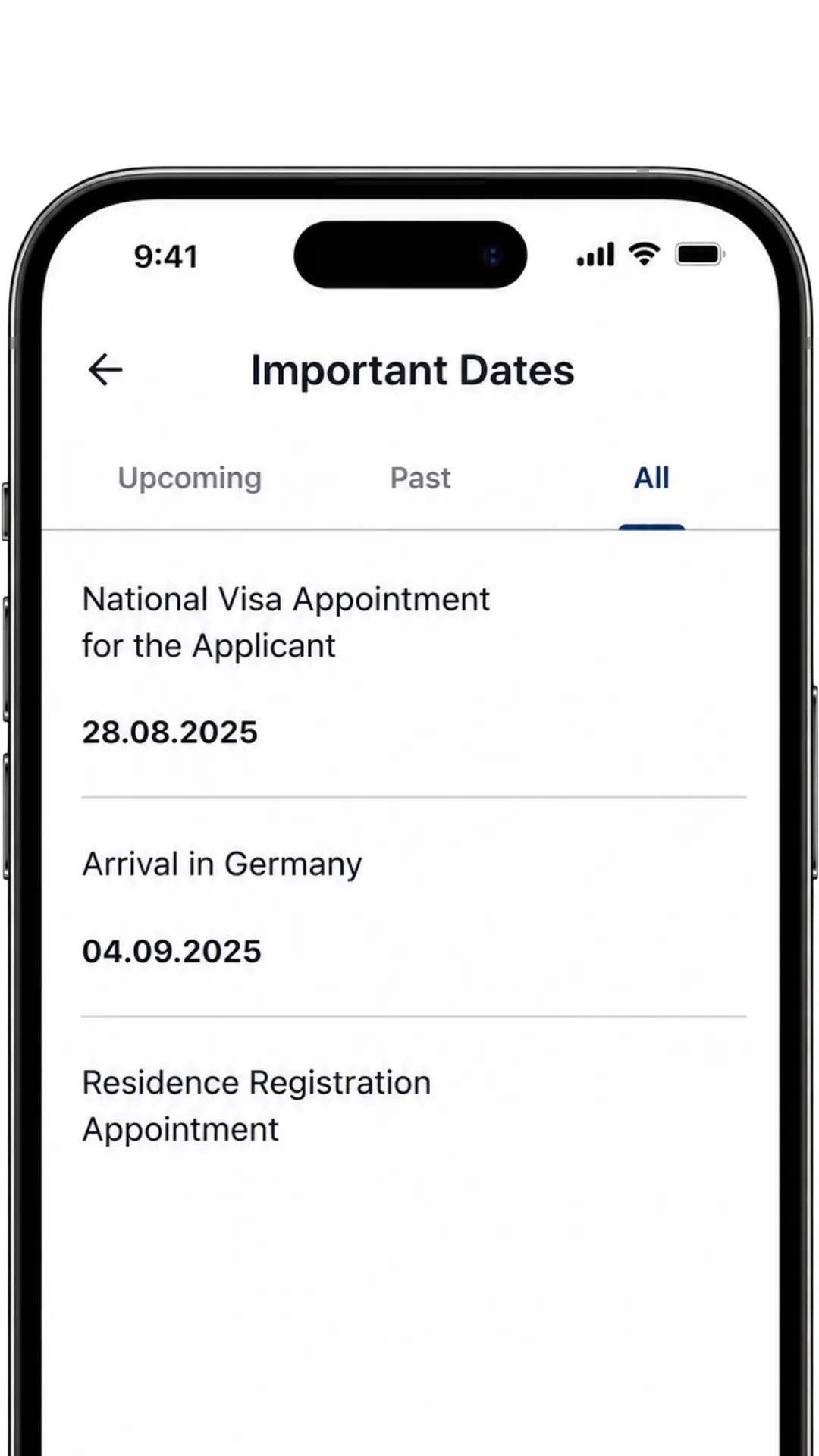
Everything you need for relocating to Germany in one place: visa and document tracking, 24/7 chat with your personal manager, up-to-date adaptation tips, deadline reminders, and a personalized relocation plan — manage the entire process without calls or bureaucracy.