Leave your details and a comment
We'll contact you to arrange a convenient date and time.
EN
Key details of applying for the Blue Card EU
The Blue Card EU is one of the most in-demand legal immigration routes for qualified specialists. This program allows you to work and live in Germany on the basis of an employment contract and follows EU-wide standards for attracting skilled talent.
There are specific details involved in applying for the Blue Card EU. Understanding them helps avoid mistakes when submitting documents and can speed up the approval process. Although the procedure is relatively transparent, it includes several legal and practical nuances that should be considered in advance.
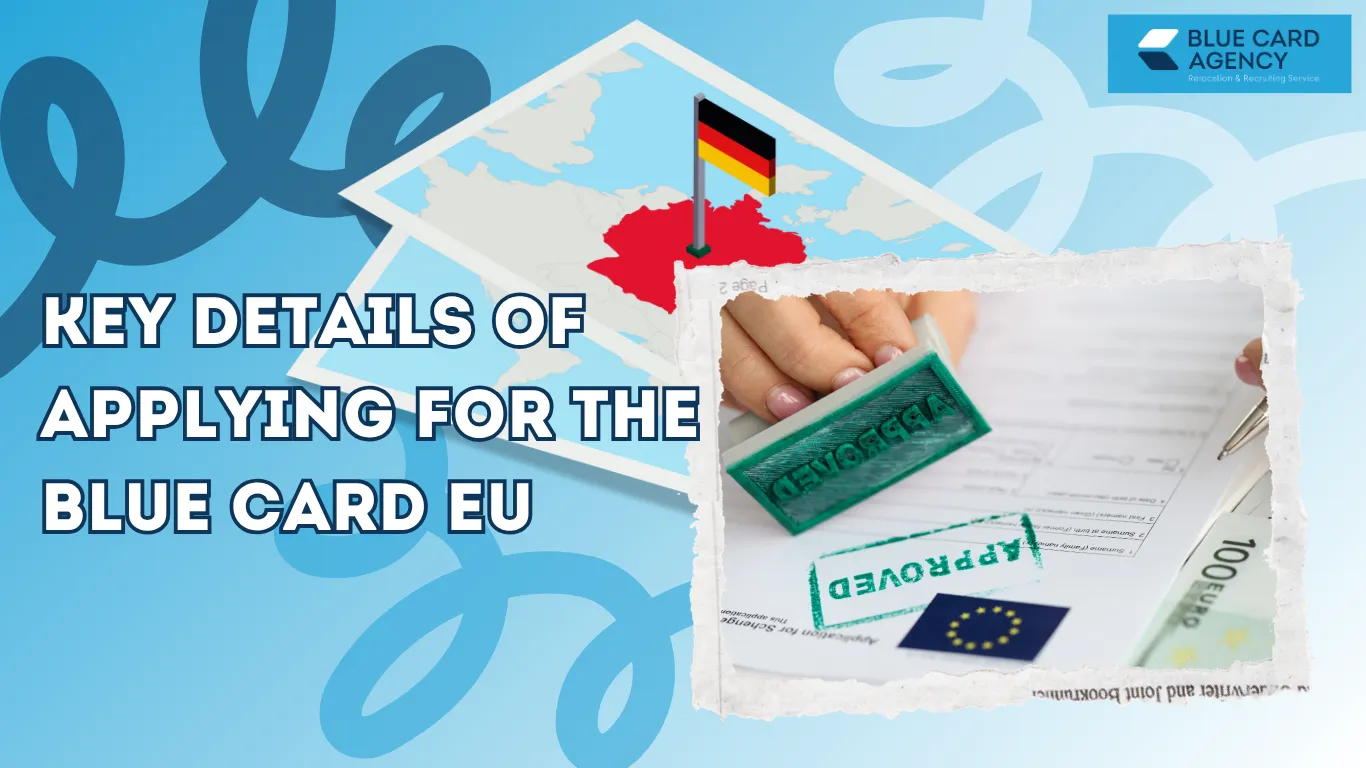
Blue Card EU application requirements: basic conditions
The main Blue Card EU application requirements are set out in Germany’s immigration law. The candidate must meet several key criteria.
First, you must have a recognized higher education degree. The diploma must either be officially recognized in Germany or comparable to a German qualification according to the Anabin database. In certain cases, proven many years of professional experience in IT may also be accepted.
Second, an employment contract with a German employer is required. The document must state an annual salary that is not below the established minimum threshold. For shortage occupations, this threshold is lower than for other specialist categories.
Health insurance and proof that your qualifications match the position are also mandatory requirements.
How to apply for the Blue Card EU in Germany: step-by-step process
The answer to the question “how to apply for the Blue Card EU in Germany” depends on whether the applicant is applying from abroad or is already in the country on another basis.
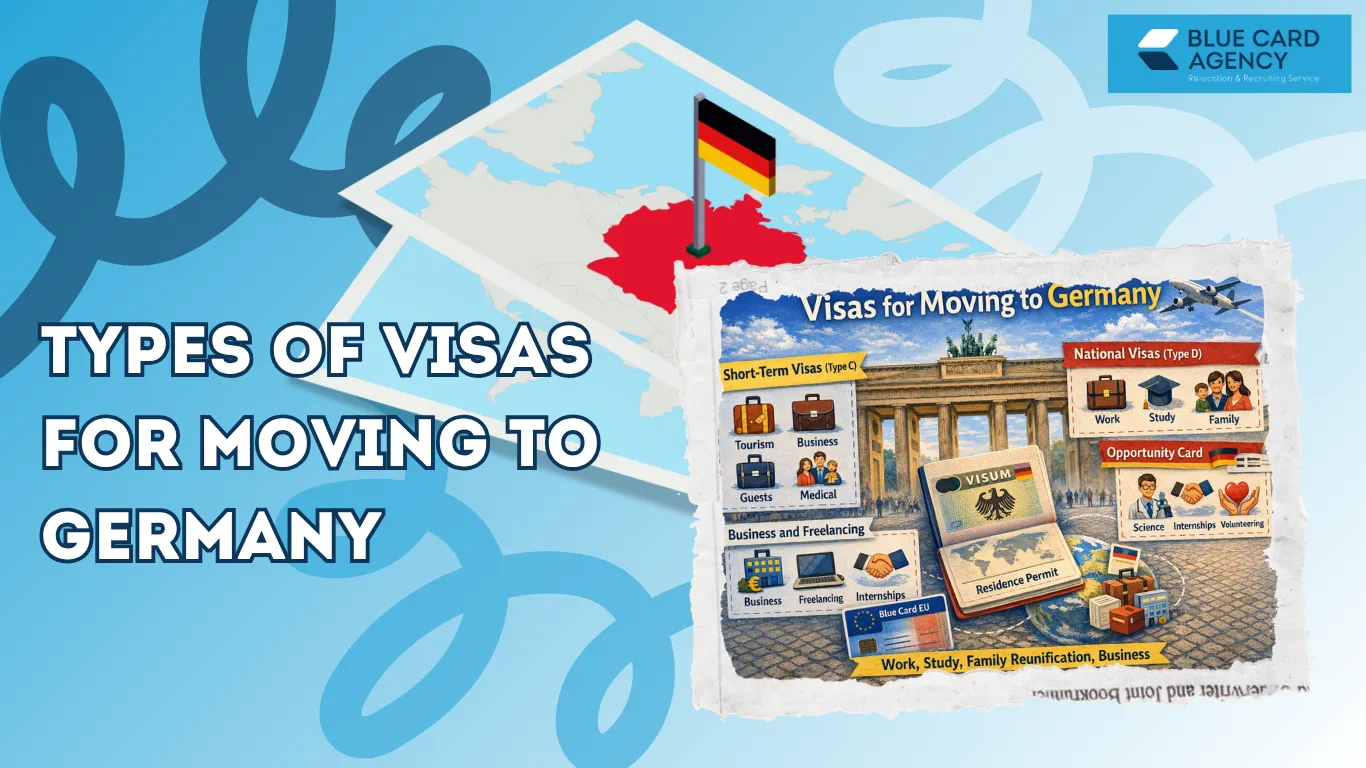
If the specialist lives outside Germany, the process begins with an application for a national category D visa at the consulate. After entry, the physical Blue Card is issued at the foreigners’ authority.
If the candidate is already in Germany, the application is submitted directly to the Ausländerbehörde at the place of registration. In this case, it is important to consider the validity period of the current residence permit.
The standard document package includes:
- valid international passport;
- employment contract;
- job description;
- proof of qualifications;
- salary details;
- health insurance;
- residence registration.
Processing time may vary depending on the region and the workload of the authority.
Salary in Germany in 2026 by region
The regional factor still plays a key role. The highest figures are recorded in Bavaria, Baden-Württemberg, and Hesse. In major economic centers, the average annual salary exceeds 60,000 euros gross.
In the eastern federal states, income levels are on average 10–15% lower, but rent and the cost of living are more affordable. Therefore, when assessing the purchasing power of a salary in Germany it is important to consider the balance between income and expenses, not just absolute figures.
Salary growth in Germany in 2026 by profession
Salary growth in Germany in 2026 is most noticeable in fields facing labor shortages. The highest-earning groups include:
- doctors and specialized medical professionals — from 95,000–110,000 euros per year;
- IT architects and cybersecurity specialists — 90,000–130,000 euros;
- mechanical and automotive engineers — 65,000–95,000 euros;
- data analysts and AI specialists — 75,000–120,000 euros;
- qualified healthcare staff — 42,000–55,000 euros.
In 2026, demand remains high for specialists with confirmed qualifications and 3–5 years of work experience. German language skills at B2–C1 level directly affect the size of the offer, especially in regulated professions.
Blue Card EU application details for shortage occupations
Germany maintains a list of occupations with specialist shortages. For these fields, simplified conditions apply to the minimum salary level. This most often applies to IT specialists, engineers, mathematicians, doctors, and technical specialists.
As part of the Blue Card EU application requirements for these categories, a lower income threshold is allowed, which expands opportunities for young specialists and graduates.
An additional advantage is the faster path to permanent residence. Blue Card holders can apply for permanent residence after just 21 or 27 months if the language requirements are met.
Blue Card benefits: a practical guide to obtaining a work permit in Germany
The Blue Card EU offers a number of advantages compared with a standard work residence permit. These include more flexible conditions for changing employers, the ability to bring family members, and faster access to permanent status.
If we look at the program as a practical route to obtaining a work permit in Germany, the key advantages are:
- transparent income requirements;
- the opportunity to work in a highly qualified field;
- the right to family reunification without long waiting periods;
- a simplified path to permanent residence;
- the ability to move within the EU if the conditions are met.
It is important to note that during the first months, changing employers requires approval from the authority.
After a certain period, the restrictions are lifted.
Summary: what to consider when applying
Understanding how to apply for the Blue Card EU in Germany involves not only collecting documents, but also a preliminary assessment of whether all criteria are met. Mistakes in diploma recognition, incorrect minimum salary calculation, or a mismatch between the position and qualification can lead to delays or refusal.
That is why thorough preparation is a key factor in successfully obtaining the status.
Consultation on applying for the Blue Card EU
If you need to understand the specific details of applying for the Blue Card EU and check whether you meet all requirements, professional support can make the process much easier.
Blue Card Agency supports clients at every stage: from checking the diploma and analyzing the contract to submitting the application and communicating with German authorities.
Book a consultation and receive a personalized action plan for successfully obtaining the Blue Card EU and legal employment in Germany.
Read also
-
-
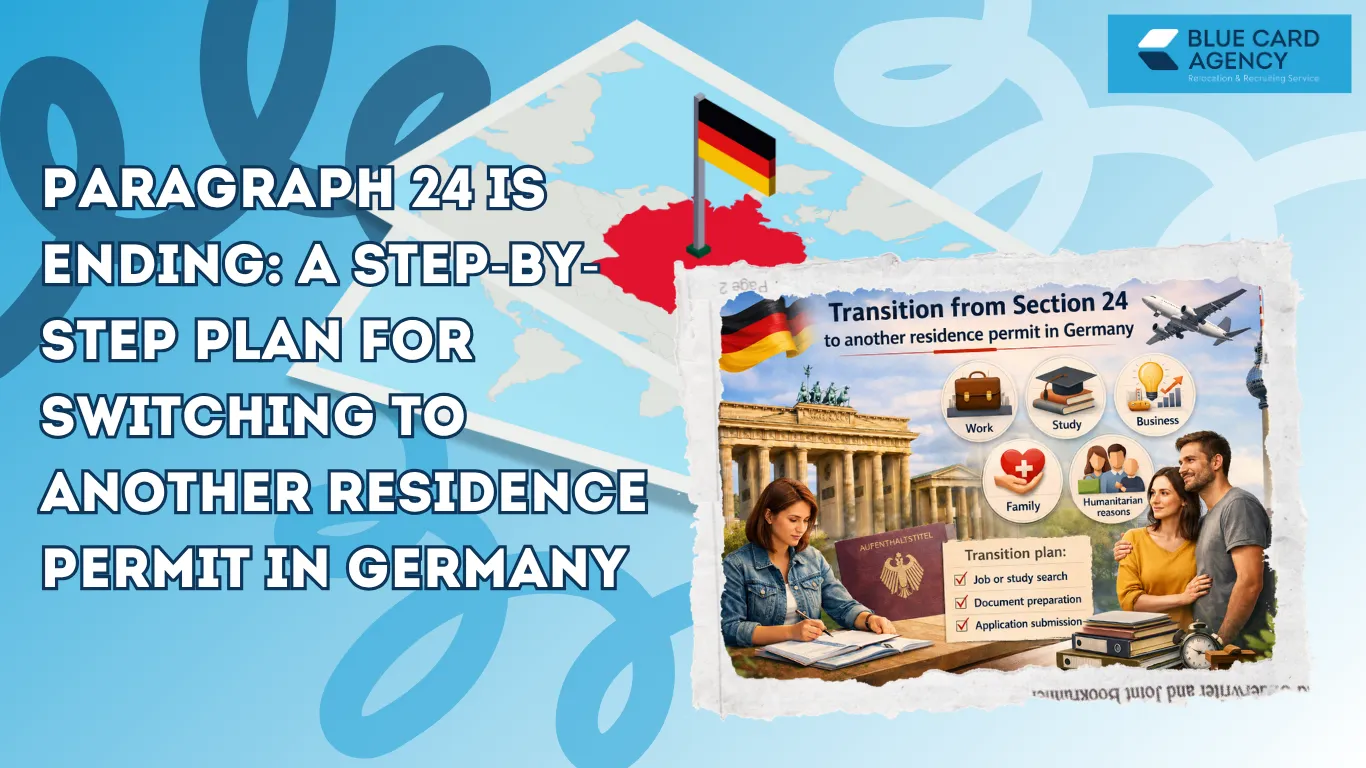
Paragraph 24 is ending: a step-by-step plan for switching to…
-
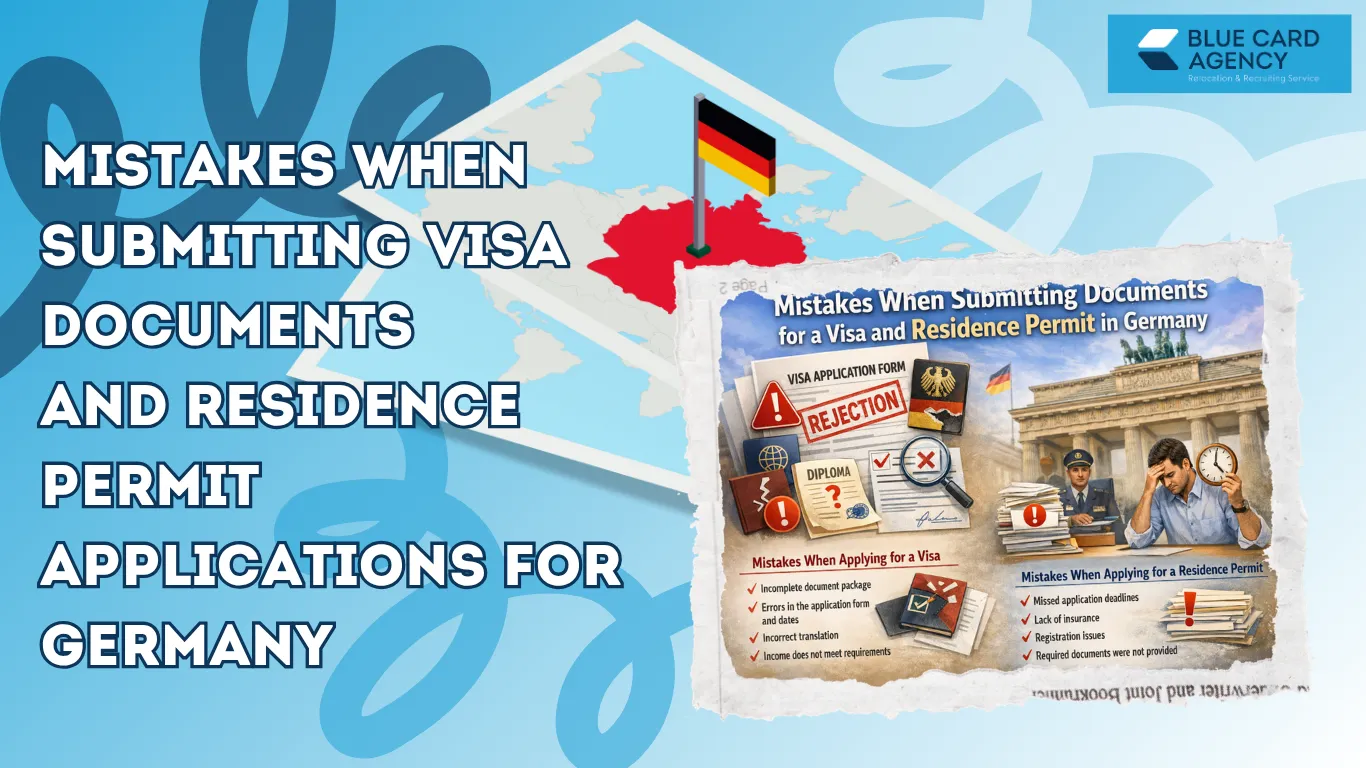
Mistakes when submitting visa documents and residence permit applications for…
-
-
How to arrange health insurance in Germany Health insurance in…
-
How to prepare your family for moving to Germany: tips…

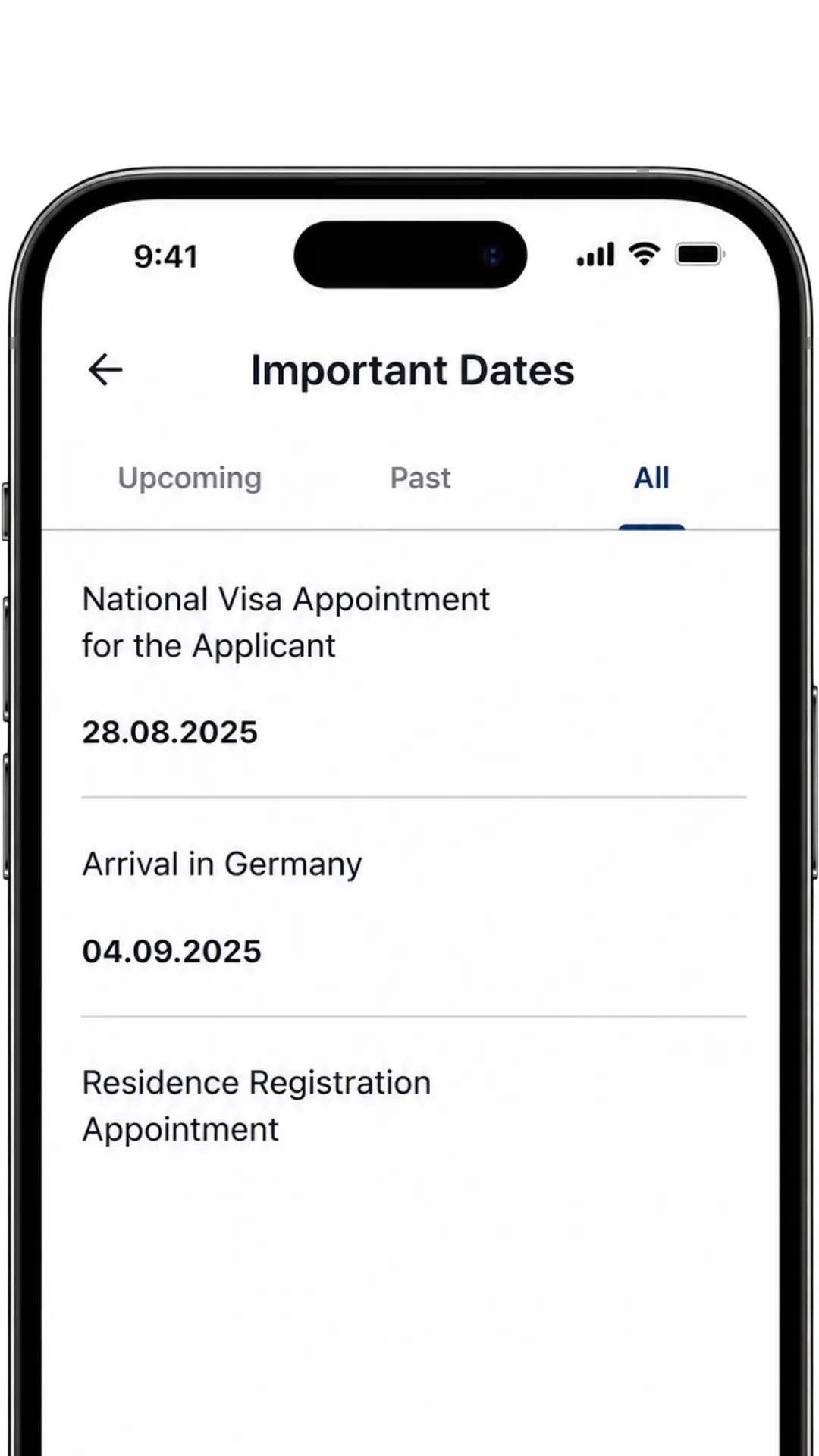
Download Our App!
Everything you need for relocating to Germany in one place: visa and document tracking, 24/7 chat with your personal manager, up-to-date adaptation tips, deadline reminders, and a personalized relocation plan — manage the entire process without calls or bureaucracy.